Showing posts with label regulation. Show all posts

Monday, 18 February 2019

CSP online-games industry overview

In time I'll cut this down to shorter bullet points, and keep more detail on my mediareg blog, with annual hub posts, starting with 2019 (I'll sum up key changes/events, especially on regulation, which along with the linked topic of monetisation is the key factor for this area of the course.
...


SOME FAQS/THEMES

Will there be statutory regulation?
Yes, its already happening: GDPR; Germany will enforce $20m fines if hate speech isn't removed within 24 hours, and it + France are leading the way on taxing the tax-dodging giants. Apple has already been forced by the EU to pay the Irish government €13bn in back-tax.

Will the FAANGS conglomerates be forced to break-up into smaller companies?
Probably, but the timescale is uncertain. EU pressure will be a factor, but it will be US regulators/politicians who ultimately decide if, like the film industry back in 1948 (Hollywood giants were forced to sell off their cinema holdings), they legally form monopolies and therefore competition + consumer protection law insists they must become smaller. The FAANGS are spending $millions to persuade US lawmakers that the EU are trying to undermine USA dominance, and that any attack on them is bad for the USA.

However, with deregulation being the long-term trend ever since Reagan back in 1980 (same for the UK from 1979 when Thatcher was elected, two very right-wing, 'free market' politicians), the film industry may actually see its anti-trust laws scrapped in 2019! Right-wing governments (eg Trump/Republicans, May/Tories) are reluctant to regulate the 'free market'.

The right-wing press may also be very free market, but they do frequently campaign for tighter regulation of other media (just not the press), which will add pressure to right-wing politicians to act.

Are children (+ how they are monetised) a factor?
Absolutely!!!
Protection of children, arguably even more than protection of democracy, is a (the?) key driver behind media regulation. The age rating system (film, games), TV watershed, multiple clauses in the press industry's Editors' Code, much of the ASA's policymaking, all are dominated or even defined by protection of children. The ASA's ruling that apps must not contain gambling if they're accessible to kids is just the start of what promises to be a tough EU-led fightback against the non-regulated, wild west approach of the 'digital gangsters' of new media.

Phone hacking was a scandal to Guardian readers until the Milly Dowler case broke, and within weeks the highest-selling Sunday paper was closed and a multi-year formal commission (Leveson) was set up to investigate newspaper malpractice, while the self-regulator, PCC, scrapped itself and announced IPSO would replace it.

Expect Facebook and Google/YouTube's lax age controls to become a major issue.

The non-regulated monetising of freemium apps (Lara Croft Go, Kim Kardashian's Hollywood) and vlogging social influencers like Zoella is already facing restrictions.


FACEBOOK + SOCIAL MEDIA TO GET STATUTORY REGULATION? UK MPs CALL FACEBOOK 'DIGITAL GANGSTERS'
Read more on the Feb 2019 'digital gangsters' statement + call for statutory regulation, which was quickly backed by the Labour party (but the Tories are unlikely to agree).
A 'digital gangster'? UK MPs are furious with Zuckerberg

Facebook (and Google/YouTube) are facing ever growing scrutiny over their (mis)use of user data and facilitation of anti-democratic forces (in US presidential election, Brexit vote, spreading of anti-vaccine ideas, etc). They have grown into vast global conglomerates with little or no formal regulation.

GDPR, laws passed within the EU to insist on minimal standards of privacy and registration of user data, was an early sign of this wild west era ending, though the lobbyists (PR, campaigners) employed by the FAANGS have successfully argued to US politicians that this is the EU trying to damage American business.

There remains the distinct possibility, though, that US regulators will get tough on them. Facebook is facing multi-billion fines for misuse of user data, which could lead to a re-think on regulation there.

Monday, 7 May 2018

2018 TV Drama exam


I'll post more on here as we go.


On page 4 of a 'teen tv drama marketing' Google I found a link to a great 4-page guide produced for this specific exam (the moodle pdf link, right, if this hyperlink doesn't work).

I've tried to split the extensive resources below into key themes. Here's one so good you can start with it, as it exemplifies one of your key challenges. Further down the post, however, you'll find bar charts on which social media young people actually use, the decline of traditional TV watching, even with second screening, and the potentially A-grabbing point on using influencers to gain a wider teen audience for your marketing efforts. (The possible downsides of teen social media use could be a great narrative theme too!). There's an award for such efforts too! The overall role of second screening also needs to be addressed - below is a point on how this arguably validates some of the controversial modern teen shows like suicide-themed 13 Reasons Why - Netflix was widely condemned for releasing the new series in the exams window.
Guardian feature.
The Shorty Awards.
An interesting look at how teen TV has gotten much darker (more realistic?) over time


Some thoughts on the briefing paper - ie, issues for you to research:

THE BRIEF THEMES:

  • 'new original serial dramas' [aim to create a franchise but not from a franchise]
  • teen audience
  • any sub-genre
  • 'realistic + relevant representations of teens' ('The Serial Box is tired of the same old stereotypes of young people') [just like Class!!!]
  • for a streaming platform NOT a digital channel [not tied to advertisers = more creative freedom like HBO]
  • #serialtelevisiondrama
  • they are moving from content provider/distributor to content creation [great article on the TV drama boom]
  • why is serial TV drama so popular with audiences
  • extensive pre-launch digital marketing campaign [teasers, blogs, vlogs, across all social media...]
  • 'you should create characters, storylines + situations that a teen audience will engage in. ... creative, imaginative and, above all, entertaining' [so hybridise some comedy]


SCHOOL SETTING: GRANGE HILL: A long-running British teen drama (that also appealed to a wider children's audience, but was widely deemed unsuitable even for teens as it covered controversial issues like drug (heroin) addiction in a shocking way). The Wiki contents shows the type of things you're looking for: spin-offs, video game (and other 'old media' like books - pic above from here)

As Class, Buffy, The OC, Dawson's Creek, Grange Hill and endless other examples show, a school setting is a common, obvious one for teen drama, with exceptions necessitating either a context without schools (The 100) or older post-school teens (Misfits).

Once you focus on older (nearly 20) teens though, you move beyond what is intended for teen drama. Misfits would undoubtedly appeal to a teen audience, but 18-rated shows can't be marketed as teen drama.
A BBFC 15-rating is just about ok, but an 18 a definite no-no. However, you do need to show awareness of the growing 'edginess' of 'teen TV'; this article overviews many of the new shows reflecting this darkness of tone. This conservative, parental ratings, site can be useful too.

You could, though, like Dr Who, conceive of possible multiple linked series (just don't lose focus of the main one to pitch!!!) for multiple audiences linking younger, main teen, older teen + beyond:

  • The Sarah Jane Adventures for tweens
  • Dr Who main series - family audience from tween to adult
  • Class for 15-24s (though will clearly appeal to younger as well) [BBFC 12 or 15]
  • Torchwood for 15-34, with main characters all adults [BBFC 12 or 15]


RESEARCH THEMES
TEEN DRAMAS
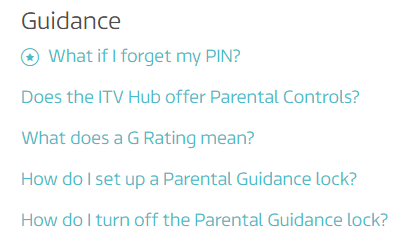
ITV Player parental controls
Good examples? Class! Buffy. The OC. Dawson's Creek. Skins. Grange Hill. The 100. ... Its not hard to find lists. Here's some UPCOMING examples, with a clear focus on edginess + identity politics/diversity. Aussie examples. I suggest you pick 3 case studies to research, with 1 a little older (released years ago) and 2 modern with maybe a difference in their BBFC ratings.

Ideally stick to related sub-genre texts (sci-fi/fantasy/horror would seem a good bet!) for detailed case studies BUT reference any teen TV drama for wider examples, regardless of (sub-)genre.

Be clear, teen drama DOES NOT EQUAL FAMILY DRAMA. Teen dramas will be much edgier than a family drama.


PARENTAL CONTROLS, STREAMING PLATFORMS
Streaming or timeshifted viewing doesn't neatly fit the watershed concept, but age restrictions will still apply. You need to research what iPlayer (BBC), ITV Player and C4's All 4 player, (etc) do for parental restrictions.
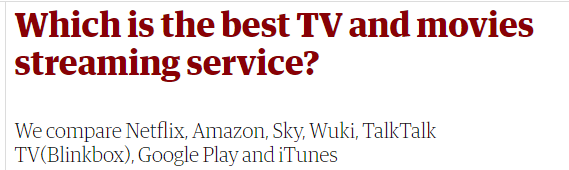
You need more boradly to research these and the American (but increasingly global) names like HBO (Wiki), Netflix, Amazon Prime, Hulu - and be aware of Disney's plans to have an exclusive online subscription for ALL their content soon (so not more Marvel films/TV on Netflix), and niche examples like WWE.com. Sky also has an add-on streaming servuce, SkyGo. Here's a Guardian overview of some major players.

How have they impacted traditional TV channels?