Showing posts with label film. Show all posts
Showing posts with label film. Show all posts
Wednesday, 16 January 2019

Monday, 20 November 2017
CSP FILM Doctor Strange
(just some key links to get started...)
Move over, Peter Parker – the new Spider-Man ushers in a bold superhero era
https://www.theguardian.com/film/2018/dec/07/move-over-peter-parker-the-new-spider-man-ushers-in-a-bold-superhero-era?CMP=Share_AndroidApp_Copy_to_clipboard
DOES ASIAN-LED MCU FILM SOLVE MARVEL'S RACE PROBLEM?
MARVEL REGRETS DOCTOR STRANGE WHITEWASHING ... AND PREPARES A CHINESE SUPERHERO MOVIE
Tuesday, 7 November 2017
CSP FILM I Daniel Blake
I'll add resources here (and format text etc) on this over time.
For more than 50 years, Ken Loach has been making social-realist dramas tied together by a prevailing thread — the compassionate observation of the struggles of the working class to hold onto such fundamental dignities as a home, a job and food on the table within a hostile system that often views them unfairly as the cause of their own misfortunes. His latest feature, I, Daniel Blake, is quintessential Loach, which means you have a good idea of what you're getting as soon as the core elements are established. And yet while the framework and perspective are familiar, the veteran Brit director's films can still have the power to grip us in an emotional chokehold. (Hollywood Reporter)
This is the type of thing you need to research and analyse: the movie was partly funded by government grants (National Lottery payments through the BFI) - not loans, grants - and is available to stream through platforms such as BFI Player (which is highly selective).

This is the guidance the exam board have given to you on this CSP, which is focused on Key Concept INDUSTRY only.

...
A NOTE ON BUDGET
In common with many Indie productions, there is no quoted budget to be found online. However, the cinematographer notes they saved £150k by filming digitally for the 1st time; there was a £300k FilmFund (BFI, funded by the UK government/National Lottery) grant and another €100k grant from Creative Europe, as well as tax breaks for filming in Britain and Belgium (as a UK, France, Belgium co-production!). Shane Meadows' 2006 social realist This is England cost Warp Films £1.5m, while Ken Loach's 2009 Looking for Eric was £4m and the 1920s war drama The Wind That Shakes the Barley a similar €6.5m.
Lets estimate IDB at a £2m budget, lacking the expense of Cantona or 1920s period costume, props and action. The important point, and I'm quoting the chief examiner in an email to me, is:
The production budget is unknown but certainly only a tiny fraction of the $165 million it cost to make Dr Strange. ...
Students need to know that in terms of actual production budget IDB costs were low, particularly in relation to Dr Strange.
RESOURCES
Director Ken Loach has a long, distinguished career, as reflected in the recent documentary about him and his films:
Here's a BFI 4min overview;
NB: it contains swearing, reflecting the frank, realistic style of his movies:
Loach is known for his social realist movies:
- low budget
- often reflected in handheld cinematography (quicker and cheaper to film)
- no stars (he often even uses non-actors)
- non-franchise (Warp's This is England is a rare exception)
- no CGI/SFX
- minority/underprivileged central protagonist (eg working class/poor, sexual or ethnic minority)
- as such people are under-represented in mainstream, commercial cinema, there is government funding to support such films
- but as Loach usually refuses to write a script, he typically finds the production budget by pre-selling rights to France, Germany and other European markets where his films have a following
- he also usually picks up funding from the BBC or Film4 (part of the Channel 4 group)
- he can struggle to get his films into UK cinemas (theatrical release); they are usually stuck in the arthouse circuit, meaning low box office prospects - but IDB was an exception...
- social realist movies explore serious social issues
- this lack of light relief is another reason these movies rarely make much money, but...
- Billy Elliot, The Full Monty, Secrets and Lies and Slumdog Millionaire are all exceptions to this general rule
- a filmmaker with a recognisable style who...
- tackles serious social and cultural issues in their work
IMDB
BoxOfficeMojo
The-Numbers
Ken Loach career (use IMDB or Wiki for a full film list; use the average figure to work out a very rough new total figure)
Scott Derrickson (now compare the 2)
Wiki
Cannes Film Festival
BBC Films
Sixteen Films (Loach's company)
Wild Bunch (co-producer, selling distribution rights)
Press pack. Includes the editor Jonathon Morris saying it cost about £150k less to shoot and edit digitally - all his previous movies were shot on film. Producer Rebecca O'Brien also explains the funding:

Mongrel media (Canadian distributor, includes press packs)
Transmission (Australian Indie distributor)
EU: Creative Europe fund (gave e100k grant)
BFI Player
Available to stream for £4.50
BFI 2016 Annual Report
STRATEGIC PRIORITY 2: Supporting the future success of British film by investing in film
development, production, talent and skills.
DEVELOPMENT AND PRODUCTION
In 2016, new British films backed by the BFI with National Lottery funding saw exciting festival
and box office success. Who’s Gonna Love Me Now? (2016), Barak and Tomer Heymann’s
documentary portrait of a young Israeli man finding a new family with the London Gay Men’s
Chorus, was an audience favourite at the Berlinale in February. In May, films by two of our most
renowned filmmakers capped a remarkable showing by British films at the Cannes Film Festival –
Andrea Arnold’s American Honey (2016), which took the Jury Prize (and went on to win the BIFA
for Best Film), and Ken Loach’s I, Daniel Blake (2016), which won the Palme D’Or and cemented
its position as one of the most talked about British films of the year, achieving the best UK box
office of the director’s career and winning the BAFTA for Outstanding British Film.
BFI 2016 Box Office Report
IDB was on the top 20 Indie list of the year ... but managed just 5% of the actual #1 (Rogue One), or about 15% of Dr Strange's UK take!


Guardian box office reports
Gant 25 Oct 2016.

It won the Palme d’Or in Cannes, comes from a beloved British auteur and has garnered critical acclaim, but would Ken Loach’s I, Daniel Blake prove too tough a sell for cinema audiences? If UK distributor eOne had any qualms, they have surely evaporated now that I, Daniel Blake has opened with an impressive £404,000 from 94 cinemas, and £445,000 including previews. Stripping out the previews, site average is a very robust £4,298.
Daily Mail 'Loach the Leech' [Chomsky: flak]

We don’t know exactly how
rich — Ken is uncharacteristically discreet on this point. But we do
know where a lot of the money that funds his films comes from.
The
public. You and me. It’s hard to think of a Ken Loach film that hasn’t
been subsidised, one way or another, by the public purse. ...
EXECREVIEW - Majors + TV boom putting squeeze on smaller movies
A combination of an increasingly risk-averse Hollywood movie system addicted to blockbuster franchises and the global explosion in mega-budget TV drama is putting the squeeze on smaller films. Cannes prize-winners are among the few lower-cost productions that are guaranteed a berth in the modern cinema market.
 |
| The BoxOfficeMojo foreign (non-US) list |
... says David Hancock, a film analyst at IHS Markit. “The Theory of Everything, films with budgets of that sort of range, are quite often the first to get the squeeze.”
He cites the mechanics of the $11bn (£8.5bn) US box office as a perfect example of the difficulties facing film-makers who lack big budgets. “Films from the major studios take more than 90% of that,” he says. “That leaves about 650 films in the US chasing 9% of the box office.”
As well as the changing focus of the film industry, pressure is being ramped up by the boom in big-budget drama flooding TV, typified by shows such as Netflix’s £100m co-production The Crown.
In the US the number of scripted shows being made annually has more than doubled since 2010 to more than 500 this year; Netflix recently revealed it has 90 original productions under way in Europe alone – Sky has 80 – and traditional broadcasters such as ITV and the BBC have upped their game with huge hits such as Broadchurch and Line of Duty.
“There is not a lot of difference between high-end TV and many films these days,” says Richard Johnston, chief executive of Endemol Shine UK, maker of forthcoming dramas including the BBC’s Troy and Sky’s Tin Star. “Most drama now is a minimum of £1m an episode and the quality and the experience is very high. And the way the market has changed means that is where a lot of the money and funding now is.”
The BFI says the figure for inward production investment in TV, mostly from US companies such as Amazon, Netflix and HBO, nearly doubled from £252m in 2013 to a record of almost £500m last year. This boost has been in part fuelled by a film industry style tax break for glossy shows costing at least £1m an episode to make which was introduced in 2013. By contrast, the spend on UK domestic films dropped to £198m in 2015, the lowest level since 2007.
 |
| There is a lot on YouTube: suggested videos from trailer page |
However, last week Entertainment One, distributor of films including La La Land, Arrival and Luc Besson’s forthcoming $180m Valerian and the City of a Thousand Planets, said it was getting out of small-budget films. Following a similar model to the Hollywood majors, the Canadian media group said that its film strategy will now focus on “producing and sourcing a reduced slate of premium films”.
MARK COSGROVE (Watershed)
'Mark Cosgrove Cinema Curator at Watershed and Chair of the Film Hub South West & West Midlands feeds back on weekly Watershed programming successes and challenges and hopes for up-coming titles.'
[24 October 2016] In the back of my mind I wondered whether Ken Loach’s state-of-the-austerity-nation address I, Daniel Blake was going to engage a big audience. It is undoubtedly the filmmaker at his most distilled (and angry) bringing to mind this portraits of contemporary British working class life: Cathy Come Home and Kes but could I, Daniel Blake replicate those films’ impact? On the basis of our admissions - and response from audiences - this weekend Loach has achieved it. I Daniel Blake registered one of our highest opening weekends with tears and applause during and after each screening. Here are a couple of comments: [the site carries pics of letters received, including from an emotional 15 year-old]
[31 October 2016] I, Daniel Blake continued its powerful emotional impact with an insignificant drop in its 2nd weekend. Audiences responses have been in incredible. We - MA Curation student Dave-Taylor Matthews and I - wondered if Loach could have the same impact today as his Cathy Come Home did in the 60s which was watched by a quarter of the population on TV. I, Daniel Blake certainly seems to be generating a national conversation with plenty of press/social media and Ken appearing on Question Time. Credit must go to Eone who have positioned the film brilliantly and also released it on just the right scale, increasing prints in week 2.
Dave had organised a Cinema of Dissent season around I, Daniel Blake picking up on Loach’s Cannes speech. The season included Leviathan, Taxi Tehran, Cathy Come Home and a talk by Cathy Come Home producer Tony Garnett which all individually attracted 80 plus admissions and helped build on the debate generated by I, Daniel Blake.
Elsewhere at Watershed it’s been one of the quieter autumn weekends: I, Daniel Blake and Nocturnal Animals were the highest performing but they are definitely winding up in their 5th and 4th weeks.
[23rd November] Elsewhere at Watershed it’s been one of the quieter autumn weekends: I, Daniel Blake and Nocturnal Animals were the highest performing but they are definitely winding up in their 5th and 4th weeks.
...
Friday, 31 March 2017
TRAILERS The It remake
This is a side-by-side comparison of the upcoming 2017 version and the original 1990 TV minseries, a useful example of how important UNoriginality plays in a film industry that recognises the difficulty in marketing new ideas, and seeks to draw in secondary older audiences through nostalgia.
...
...
Wednesday, 29 March 2017
FILM pitching
Use your practice pitch, and notes/handouts to help develop a strong pitch - the process of presenting a film proposal to film financiers/distributors, trying to convince them to risk money on your movie.
Your pitch should be backed by a PowerPoint or video with plentiful, frequent, relevant illustration.
This needs to be emailed (a YouTube link if video) before the Friday 7th April lesson. You will also Monday's lesson to work on this.
It should address:
1: SYNOPSIS
In no more than 2 sentences, sum up the narrative.
State at least 2 films this has similarities to (explain how), noting their box office + which audience/s you think those examples appeal to.
RESEARCH TIP: if you google 'film title box office https://www.theguardian.com/uk/film' you might find useful analysis on the audience, or just try 'film title audience' - Avatar example1; example2.
Your pitch should be backed by a PowerPoint or video with plentiful, frequent, relevant illustration.
This needs to be emailed (a YouTube link if video) before the Friday 7th April lesson. You will also Monday's lesson to work on this.
It should address:
1: SYNOPSIS
In no more than 2 sentences, sum up the narrative.
State at least 2 films this has similarities to (explain how), noting their box office + which audience/s you think those examples appeal to.
RESEARCH TIP: if you google 'film title box office https://www.theguardian.com/uk/film' you might find useful analysis on the audience, or just try 'film title audience' - Avatar example1; example2.
Monday, 6 March 2017
Warp v Working Title Film examples
EXPLORING THE FILM INDUSTRY FOR ASSIGNMENT 2
We'll watch and compare these two trailers shortly
You can find additional resources in these posts:
We'll focus on two contrasting companies to begin exploring this industry.
You can see the trump cards below for a selection of these. NOTE: I've blogged on many of these films in much more detail over on my Cinema blog.
Here are the boxofficemojo links for each (this site gives budgets, box office figures):
WORKING TITLE
Bridget Jones's Baby (Maguire, 2016)
Sequel to Bridget Jones' Diary and Bridget Jones: Edge of Reason
Green Zone (Greengrass, 2010)
Marketing of this action/spy thriller tried to tap into the Bond rip-off Bourne's success by focusing on Matt Damon, with disappointing resultd
Hot Fuzz (Wright, 2007)
Second of the 'Cornetto Trilogy' this cop buddy satire was a sizeable hit despite its low budget.
Legend (Helgeland, 2014)
International audiences just weren't familiar with the Kray Twins (real life post-war London gangsters), and so box office was low outwith the UK
Les Miserables (Hooper, 2012)
The sort of A-list star-studded movie, based on a globally successful IP (the long-running musical), that Indies couldn't dream of, this was a solid success
Notting Hill (Michell, 1999)
The company's second global hit rom-com starred megastar Julia Roberts, and made a star of Hugh Grant, fresh of Four Weddings and a Funeral success.
Paul (Mottola, 2011)
Featuring the (British) Cornetto Trilogy leads, this sci-fi/comedy hybrid used an A-lister (Seth Rogen) and a US setting to boost its US and international appeal
Shaun of the Dead (Wright, 2004)
Still popular with today's teens, the zom-rom-com that kickstarted the Corentto Trilogy
The World's End (Wright, 2013)
The budget was much higher than the previous Cornetto Trilogy movies, but the box office wasn't - I've blogged on why in detail
Theory of Everything (Marsh, 2014)
Typical Working Title: well off white southern English characters in a grand setting, with the romance framework boosting appeal to this biopic of Stephen Hawking.
WARP FILMS/WARP X
'71 (Demange, 2014)
Set at the start of the Northern Ireland 'Troubles' (armed conflict verging on civil war), this action/thriller could have been a hit with a star or two
Four Lions (Morris, 2010)
Such a bizarre idea: a comedy about a su*icide b*mber! A suprise hit in the UK, but it didn't do well in the US
She a Chinese (Xiaolu, 2011) [no entry]
You can't get much more uncommercial (unlikely to make money) than this: a Chinese woman illegally stays in Britain after running off from an official tour
Submarine (Ayaode, 2010)
Ingenious Welsh teen rom-com
This is England (Meadows, 2006)
The franchise continued on TV, with 3 series of sometimes brutal social realist drama
Tyrannosaur (Considine, 2011)
Another dark drama, despite the (sort-of) romance, it proved a hard sell with its two unglamorous middle-aged leads
Le Donk and Scor-Zay-Zee (Meadows, 2009)
Shane Meadows shot this mockumentary in just 5 days! Its entire budget wouldn't cover the catering on some tentpole Hollywood shoots!
We'll watch and compare these two trailers shortly
You can find additional resources in these posts:
- Video of summer 2015 hits + the (UK Indie) posters/trailers from page2 of the handout
- Pitching pointers and gallery of hybrid movies
- Working Title is owned by a huge US conglomerate (company that owns other companies), and so can make high budget movies
- Warp is an Indie (not owned by a larger company), and so makes low budget films
You can see the trump cards below for a selection of these. NOTE: I've blogged on many of these films in much more detail over on my Cinema blog.
Here are the boxofficemojo links for each (this site gives budgets, box office figures):
WORKING TITLE
 |
| 2 contrasting companies in trump cards (gallery further down) |
Sequel to Bridget Jones' Diary and Bridget Jones: Edge of Reason
Green Zone (Greengrass, 2010)
Marketing of this action/spy thriller tried to tap into the Bond rip-off Bourne's success by focusing on Matt Damon, with disappointing resultd
Hot Fuzz (Wright, 2007)
Second of the 'Cornetto Trilogy' this cop buddy satire was a sizeable hit despite its low budget.
Legend (Helgeland, 2014)
International audiences just weren't familiar with the Kray Twins (real life post-war London gangsters), and so box office was low outwith the UK
Les Miserables (Hooper, 2012)
 |
| Global IP/brand + A-list stars = global hit! |
Notting Hill (Michell, 1999)
The company's second global hit rom-com starred megastar Julia Roberts, and made a star of Hugh Grant, fresh of Four Weddings and a Funeral success.
Paul (Mottola, 2011)
Featuring the (British) Cornetto Trilogy leads, this sci-fi/comedy hybrid used an A-lister (Seth Rogen) and a US setting to boost its US and international appeal
Shaun of the Dead (Wright, 2004)
Still popular with today's teens, the zom-rom-com that kickstarted the Corentto Trilogy
The World's End (Wright, 2013)
The budget was much higher than the previous Cornetto Trilogy movies, but the box office wasn't - I've blogged on why in detail
Theory of Everything (Marsh, 2014)
Typical Working Title: well off white southern English characters in a grand setting, with the romance framework boosting appeal to this biopic of Stephen Hawking.
 |
| Budget: just £48k! |
'71 (Demange, 2014)
Set at the start of the Northern Ireland 'Troubles' (armed conflict verging on civil war), this action/thriller could have been a hit with a star or two
Four Lions (Morris, 2010)
Such a bizarre idea: a comedy about a su*icide b*mber! A suprise hit in the UK, but it didn't do well in the US
She a Chinese (Xiaolu, 2011) [no entry]
You can't get much more uncommercial (unlikely to make money) than this: a Chinese woman illegally stays in Britain after running off from an official tour
Submarine (Ayaode, 2010)
Ingenious Welsh teen rom-com
This is England (Meadows, 2006)
The franchise continued on TV, with 3 series of sometimes brutal social realist drama
Tyrannosaur (Considine, 2011)
Another dark drama, despite the (sort-of) romance, it proved a hard sell with its two unglamorous middle-aged leads
Le Donk and Scor-Zay-Zee (Meadows, 2009)
Shane Meadows shot this mockumentary in just 5 days! Its entire budget wouldn't cover the catering on some tentpole Hollywood shoots!
Monday, 26 September 2016
BBFC visit
We'll review our visit to the BBFC HQ with 3 simple questions:
 To learn more about the BBFC, you can access their excellent education service through their website. I have also blogged on the BBFC on several of my blogs, but especially on the 'mediareg' [media regulation, an A2 exam topic] blog; you can use the BBFC tag to find any post I've tagged as being linked to the BBFC, but might find this post especially interesting. Do note that I've commented on 18-rated films, but haven't embedded 18-rated content. I embedded videos, such as interviews with BBFC censors, in this post.
- What was the most surprising/shocking/interesting thing you saw or heard?
- Sum up the differences between PG, 12 and 15 (and the others, U and 18, if you have time), using real examples from BBFC Insight
- What industry is the film industry age classification body the BBFC also starting to work in, and why will this be problematic/difficult?
 |
| A simple 'bbfc' google indicates the range of great features of the BBFC site. Screenshot below |
 To learn more about the BBFC, you can access their excellent education service through their website. I have also blogged on the BBFC on several of my blogs, but especially on the 'mediareg' [media regulation, an A2 exam topic] blog; you can use the BBFC tag to find any post I've tagged as being linked to the BBFC, but might find this post especially interesting. Do note that I've commented on 18-rated films, but haven't embedded 18-rated content. I embedded videos, such as interviews with BBFC censors, in this post.
Wednesday, 11 May 2016
Friday, 18 March 2016
FILM poster AND teaser analysis examples
Thanks to Euan for passing on a link to this vid:
Thanks to Ismini for passing on this link, a very useful example that contains analysis of multiple posters and trailers, and also breaks down much of the planning involved in creating these texts too.


Thanks to Ismini for passing on this link, a very useful example that contains analysis of multiple posters and trailers, and also breaks down much of the planning involved in creating these texts too.
https://shannoncotton2.wordpress.com/author/shannoncotton/page/4/
(magazines analysis here; POSTERS analysis here; trailer - NOT teaser- here)
(magazines analysis here; POSTERS analysis here; trailer - NOT teaser- here)


Tuesday, 15 March 2016
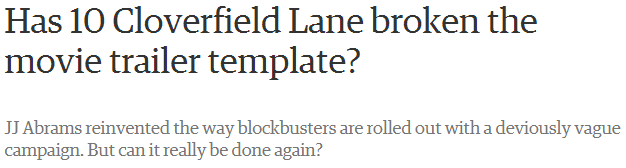
TRAILERS Cloverfield redefines teaser trailer?
Here's a sample:
The roll-out of a new trailer has become a tiresome exercise. Ten-second teasers precede a 6o-second teaser, which is followed by a two-minute trailer, accompanied by another two-minute international trailer, and perhaps finished off with some TV spots and a final internet-only trailer.
Friday, 26 February 2016
FILM assignment 2 Cross-Media marking criteria
**CLICK READ MORE AND SCROLL TO THE BOTTOM FOR EXAM BOARD FULL MARK EXAMPLES**
Read more yourself: all exam board guides are here.
They are free and accessible to parents and students.
Below you can find the official marking criteria for the cross-media assignment.
Click image to enlarge.
Click read more to see the assessment criteria (how marks/grades are awarded) for THIS assignment.
These are the 'Assessment Objectives' that marks are awarded for on the coursework unit

A reminder of how this fits in to the overall coursework unit:

How the exam board describe this assignment.
Note - the Key Concepts of Institution and Representation are highlighted:


This is the exam broad brief for the film promotion cross-media task we work on:

THE 200 WORD EXPLANATION
Official guidance on this is very brief:
Candidates should explain in no more than 200 of the 1000 - 1200 words allocated, how their two research, planning and production tasks are connected and how effective they are. They should also comment on how they have addressed representational and institutional issues.So, you should include:
- how your research influenced your own production
- how effective/convincing your productions are
- apply Key Concept Representation to your work
- apply Key Concept Institution to your work
Below - click read more for the actual assessment criteria:
FILM teaser trailer
Year 11: Lesson Thursday 9th March
You need to plan and storyboard (filming, editing aren't required) a teaser trailer to accompany your poster; you will then be comparing the two texts, using terms from the Key Concepts Media Language and Audience, but also Representation and Institution to do so.
As always, you need to first research and summarise the conventions of the media format. You will re-pitch your film idea (many of you are changing this from your Year 10 idea) next week (we will look at what is required on Friday).
Today, follow the instructions below; the Word worksheet you need is embedded further down in this post.
TASK: View and analyse 3 teaser trailers from different genres, using the handout for note-taking, then share and add notes for two more from two different students. Summarise your findings.
Use the template below. Seek to apply your media language terms and learning - including some semiotic terms.
Add a summary to the end of each trailer analysed, a good opportunity to use media language and semiotic terms (connote, denote; signifier, signified etc):
PRESENTING CONVENTIONS RESEARCH (Tuesday 8th lesson; complete + email for Monday 14th)
You are limited in the amount of evidence you can present [see assessment criteria], so you need to combine image and concise, precise text well. This evidence needs to showcase your wider learning, not simply list your observations on the common conventions of a media format.
You will be DRAFTING an outline of your INITIAL findings today - we will later focus on a comparison of the two media formats, poster and teaser trailer. We will also review your trailer conventions findings and look more deeply at how to apply the Key Concepts:
SCREENSHOTS: On L17 PCs, use the 'snip' tool to bring up the option of dragging around the area you want to screenshot. Click:
Avatar star billing
If you're making a point about use of ('non-diegetic')* voiceover, a screenshot isn't necessary.
For a point on how sound is used with editing, take a screenshot of the moment when a loud sound effect is applied.
APPLYING MEDIA TERMINOLOGY
As you put these together in Word (etc), identify the shot type, angle, and seek to apply semiotic terms (denote, connote; signifier, signified etc) where you can.
Where there is a clear link to Institution (stars and budget/box office, director and their previous films etc), include some evidence of research. Don't simply rely on your observations!
RESEARCH RESOURCES:
There are multiple posts on this blog which can help, as well as your handouts and notes.
There are several ways of finding out a film's box office and budget.
The Wiki often gives this, but isn't always reliable - if using this, hover over the link given beside any figure and click through to it to check the figure is right.
RESEARCHING CONVENTIONS (Monday 7th lesson)
TASK: View and analyse 3 teaser trailers from different genres, using the handout for note-taking, then share and add notes for two more from two different students. Summarise your findings.
Use the template below. Seek to apply your media language terms and learning - including some semiotic terms.
Add a summary to the end of each trailer analysed, a good opportunity to use media language and semiotic terms (connote, denote; signifier, signified etc):
I will be gathering resources below to help you with this, an ongoing process.
I briefly maintained a blog on the dual topics of short films and teaser trailers; there are various resources, including links lists. In time, I will port anything useful from there to here.
You can go to the major film studios' YouTube channels and search for 'teaser trailer' in these, for example, I did this with Warner Bros.
If you have a google account you can set up your own YouTube channel - useful for creating your own playlists of trailers you want to study, as I have done:
...
You need to plan and storyboard (filming, editing aren't required) a teaser trailer to accompany your poster; you will then be comparing the two texts, using terms from the Key Concepts Media Language and Audience, but also Representation and Institution to do so.
As always, you need to first research and summarise the conventions of the media format. You will re-pitch your film idea (many of you are changing this from your Year 10 idea) next week (we will look at what is required on Friday).
Today, follow the instructions below; the Word worksheet you need is embedded further down in this post.
HOMEWORK for Friday: Have completed analysis, using the worksheet, of 3 teaser trailers from different genres. This will be more useful if you discuss with each other and try to look at different trailers.
HOMEWORK for Thursday 16th: Have emailed your teaser trailer conventions summary presentation.
HOMEWORK for Friday 17th: Have emailed PowerPoint for your re-pitch.
TASK: View and analyse 3 teaser trailers from different genres, using the handout for note-taking, then share and add notes for two more from two different students. Summarise your findings.
Use the template below. Seek to apply your media language terms and learning - including some semiotic terms.
Add a summary to the end of each trailer analysed, a good opportunity to use media language and semiotic terms (connote, denote; signifier, signified etc):
HOW AUDIENCE IS SIGNIFIED: what audience do you think this is aimed at (gender, age range), and why do you think this (provide evidence from the trailer)------------------------------------------------------------------------------------------------------------------------
HOW GENRE IS SIGNIFIED what genre do you think this is and how has it been signified (provide evidence from the trailer)
PRESENTING CONVENTIONS RESEARCH (Tuesday 8th lesson; complete + email for Monday 14th)
You are limited in the amount of evidence you can present [see assessment criteria], so you need to combine image and concise, precise text well. This evidence needs to showcase your wider learning, not simply list your observations on the common conventions of a media format.
You will be DRAFTING an outline of your INITIAL findings today - we will later focus on a comparison of the two media formats, poster and teaser trailer. We will also review your trailer conventions findings and look more deeply at how to apply the Key Concepts:
- (building on Assignment One) Media Language [shot types, angles, semiotics]
- Audience [primary, secondary, uses + gratifications; gender, age, four quadrant]
- (introduced through Assignment Two) Representation (stereotype, countertype)
- Institutions (ownership, budget, box office, distribution, synergy)
SCREENSHOTS: On L17 PCs, use the 'snip' tool to bring up the option of dragging around the area you want to screenshot. Click:
- Windows [start menu, bottom left of the screen]
- All programs
- Accessories
- Snipping
Avatar star billing
If you're making a point about use of ('non-diegetic')* voiceover, a screenshot isn't necessary.
For a point on how sound is used with editing, take a screenshot of the moment when a loud sound effect is applied.
*sound is diegetic if it comes from the world on screen: someone speaking or music through a hi-fi for example (it/they might not be in shot - use your judgement); if the sound is not from the scene on screen (eg music soundtrack, often as an audio bridge linking different scenes) it is non-diegetic [pronounced die-uh-jet-ic]
APPLYING MEDIA TERMINOLOGY
As you put these together in Word (etc), identify the shot type, angle, and seek to apply semiotic terms (denote, connote; signifier, signified etc) where you can.
Where there is a clear link to Institution (stars and budget/box office, director and their previous films etc), include some evidence of research. Don't simply rely on your observations!
RESEARCH RESOURCES:
There are multiple posts on this blog which can help, as well as your handouts and notes.
There are several ways of finding out a film's box office and budget.
The Wiki often gives this, but isn't always reliable - if using this, hover over the link given beside any figure and click through to it to check the figure is right.
BoxOfficeMojo gives you a global figure but also breaks it down by country, which can be very useful.
IMDB gives budget, box office, cast/crew and more - you can find out what else cast/crew (and companies) have done here.
The-Numbers is similar to BoxOfficeMojo, a data (box office) driven site, but provides more extras.
RESEARCHING CONVENTIONS (Monday 7th lesson)
TASK: View and analyse 3 teaser trailers from different genres, using the handout for note-taking, then share and add notes for two more from two different students. Summarise your findings.
Use the template below. Seek to apply your media language terms and learning - including some semiotic terms.
Add a summary to the end of each trailer analysed, a good opportunity to use media language and semiotic terms (connote, denote; signifier, signified etc):
HOW AUDIENCE IS SIGNIFIED: what audience do you think this is aimed at (gender, age range), and why do you think this (provide evidence from the trailer)
HOW GENRE IS SIGNIFIED what genre do you think this is and how has it been signified (provide evidence from the trailer)
------------------------------------
More will be added! TBC
------------------------------------
Alongside the film poster, to evidence a cross-media campaign, and a grasp of the conventions of this, you need to also work on a teaser trailer for your film concept.You do not need to actually produce this (but can do so, and this would be useful experience); clear planning materials, particularly highly detailed storyboards, will suffice.
 |
| You can research conventions by finding a range of examples to view |
I briefly maintained a blog on the dual topics of short films and teaser trailers; there are various resources, including links lists. In time, I will port anything useful from there to here.
You can go to the major film studios' YouTube channels and search for 'teaser trailer' in these, for example, I did this with Warner Bros.
If you have a google account you can set up your own YouTube channel - useful for creating your own playlists of trailers you want to study, as I have done:
...
Wednesday, 24 February 2016
FILM the AIDA theory
Along with semiotic terms (signifier, signify, signified, denote, connotation etc) and media language terms (shot types, angles etc), you can also challenge yourself to use a little bit of theory.
'AIDA' is a common concept within the marketing and design industry - the resources below will help you identify what this is, and should help you create a smarter poster that is higher impact with your audience ...
WEBDESIGNERDEPOT
This page uses lots of very clear examples and builds 'AIDA' into a 7-step design process.
Think about how the examples below use smart semiotics to tell the story; they encode the meaning through smart use of imagery which work as signifiers, connoting the genre and the theme of sex appeal. The image choice also suggests, or denotes, a female lead. The tagline helps, but isn't too obvious and doesn't clumsily provide anchorage for the otherwise polysemic meaning.
[if any of that is confusing, just ask me to go through it!]

The PowerPoint below uses elements from this website to look at the same idea.
Read more here and here.
The Wiki.
It is used far beyond film posters - see here and here.
...
'AIDA' is a common concept within the marketing and design industry - the resources below will help you identify what this is, and should help you create a smarter poster that is higher impact with your audience ...
WEBDESIGNERDEPOT
This page uses lots of very clear examples and builds 'AIDA' into a 7-step design process.
Think about how the examples below use smart semiotics to tell the story; they encode the meaning through smart use of imagery which work as signifiers, connoting the genre and the theme of sex appeal. The image choice also suggests, or denotes, a female lead. The tagline helps, but isn't too obvious and doesn't clumsily provide anchorage for the otherwise polysemic meaning.
[if any of that is confusing, just ask me to go through it!]

The PowerPoint below uses elements from this website to look at the same idea.
Read more here and here.
The Wiki.
It is used far beyond film posters - see here and here.
...
FILM what goes in a poster
We will work on a final checklist together, but here are several suggestions that should help you draw up an initial list.
To do so, paste a poster into Word or Photoshop and draw arrows to where you see these clearly described (denoted) features.
Has the list below missed anything? Are there any more terms you might use?

An example of how you might evidence your research into conventions - is it really comprehensive enough, or is it missing features? Are these the best examples (do they demonstrate all the conventions?)?

To do so, paste a poster into Word or Photoshop and draw arrows to where you see these clearly described (denoted) features.
Has the list below missed anything? Are there any more terms you might use?


An example of how you might evidence your research into conventions - is it really comprehensive enough, or is it missing features? Are these the best examples (do they demonstrate all the conventions?)?


there are more examples - click on read more below
FILM finding Photoshop guides for impressive FX!
You can find very specific guides online to create all sorts of effects and types of text, and this includes lots of guides for film posters generally, and also for particular film styles or FX.
JUSTCREATIVE - THE PROCESS, AND A SAMPLE TEMPLATE TO EXPERIMENT WITH
This designer includes images you can work with to follow his instructions, and he guides you the design process - including drafting, getting audience feedback, and then re-drafting, making it clear what changes were made and why!
You too should be able to picture your final poster as a huge display in public!

VANDELAYDESIGN - 39 SPECIFIC GUIDES
There is a very wide range of step by step tutorials: sci-fi, 80s, 60s, Lord of the Rings, Indiana Jones ...
 Making a convincing action poster is challenging; this guide could help you achieve that!
JUSTCREATIVE - THE PROCESS, AND A SAMPLE TEMPLATE TO EXPERIMENT WITH
This designer includes images you can work with to follow his instructions, and he guides you the design process - including drafting, getting audience feedback, and then re-drafting, making it clear what changes were made and why!
You too should be able to picture your final poster as a huge display in public!

VANDELAYDESIGN - 39 SPECIFIC GUIDES
There is a very wide range of step by step tutorials: sci-fi, 80s, 60s, Lord of the Rings, Indiana Jones ...

CLICK READ MORE below TO SEE MORE LINKS AND EXAMPLES
Monday, 15 February 2016
FILM box office, budget,production practices
As we'll see, there are some key choices made at the production stage that heavily influence the chances of a filming becoming a hit. We will consider only some of these here.
SUMMER 2015 US BOX OFFICE TOP 10
This 3-minute video runs down the top 10 biggest hits (box office is the total amount of money they took in from cinema ticket sales).
As you view this use your handout to note any success factors (or good production practices) you can think of.
Gallery with 2 posters for each, and a main cast list.
FILM BUDGETS
Why do you think such films usually cost so much to make?
What choices are made that raise the budget?
(You will shortly be considering what choices to make for your proposed film)
FAMILY FORTUNES...
Time to take a break and play a game...
COMPARING WITH 5 UK EXAMPLES
See if you can match these films to the budget provided and the box office, and work out why they didn't do well.
HINT: cast, genre (they all use 'social realism', a genre that doesn't use stars ... or CGI ... or familiar 'posh' characters ... or the usual UK settings [London/South of England!] ... and can be a bit grim, 'downbeat').
There is ONE positive marketing element for all of these, involving places like Cannes, Toronto, Berlin, and newspapers like The Guardian...
How many of these have you heard of or seen?
How many of the 'stars' have you heard of?
They're all award-winning films!
'k' = £000 (so £22k = £22,000)
CTRL-CLICK to view full-size (CMD-click on a Mac)

Here's the trailer for For Those in Peril - what 'success factors' do you see? Stars? CGI? A popular genre? Franchise?


Here's the trailer for This is England - what 'success factors' do you see? Stars? CGI? A popular genre? Franchise?
NB: the full film is 18-rated, but the trailer is cut to enable it to be shown with 12-rated films.

SUMMER 2015 US BOX OFFICE TOP 10
This 3-minute video runs down the top 10 biggest hits (box office is the total amount of money they took in from cinema ticket sales).
As you view this use your handout to note any success factors (or good production practices) you can think of.
Gallery with 2 posters for each, and a main cast list.
FILM BUDGETS
Why do you think such films usually cost so much to make?
What choices are made that raise the budget?
(You will shortly be considering what choices to make for your proposed film)
FAMILY FORTUNES...
Time to take a break and play a game...
COMPARING WITH 5 UK EXAMPLES
See if you can match these films to the budget provided and the box office, and work out why they didn't do well.
HINT: cast, genre (they all use 'social realism', a genre that doesn't use stars ... or CGI ... or familiar 'posh' characters ... or the usual UK settings [London/South of England!] ... and can be a bit grim, 'downbeat').
There is ONE positive marketing element for all of these, involving places like Cannes, Toronto, Berlin, and newspapers like The Guardian...
How many of these have you heard of or seen?
How many of the 'stars' have you heard of?
They're all award-winning films!
'k' = £000 (so £22k = £22,000)
CTRL-CLICK to view full-size (CMD-click on a Mac)

Here's the trailer for For Those in Peril - what 'success factors' do you see? Stars? CGI? A popular genre? Franchise?


Here's the trailer for This is England - what 'success factors' do you see? Stars? CGI? A popular genre? Franchise?
NB: the full film is 18-rated, but the trailer is cut to enable it to be shown with 12-rated films.

Sunday, 14 February 2016
FILM Hybrid genres and pitching
We started with this (PG-13) trailer; listening only to the opening 50 seconds, viewing the rest.
It is an example of a hybrid genre film.
Others are illustrated in the PowerPoint below.
Your task today is this:
You have been invited to pitch a film idea to the world's most successful film distributor, Universal International Pictures.
They are especially interested to hear of any hybrid ideas you might have - no matter how outrageous.
You could combine two existing film franchises (series) or attempt a more original idea.
Either way you need to detail:


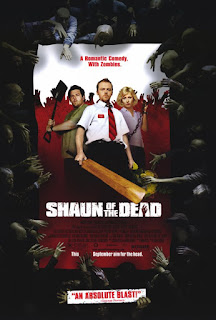


Classic taglines; filmsite selected taglines; shortlist poster gallery of great taglines.
It is an example of a hybrid genre film.
Others are illustrated in the PowerPoint below.
Your task today is this:
You have been invited to pitch a film idea to the world's most successful film distributor, Universal International Pictures.
They are especially interested to hear of any hybrid ideas you might have - no matter how outrageous.
You could combine two existing film franchises (series) or attempt a more original idea.
Either way you need to detail:
- the budget
- the main cast
- the genres
- which film/s it can be compared to (it should be clear they are successful films!)
- the title
- at least one tagline
- a summary of why you think this film would be box office gold


Classic taglines; filmsite selected taglines; shortlist poster gallery of great taglines.
Subscribe to:
Posts (Atom)