Tuesday, 8 May 2018
STREAMING TV BBC NBC mega iPlayer?
BBC, ITV and Channel 4 in talks to create UK streaming service
https://www.theguardian.com/film/2018/may/07/bbc-itv-and-channel-4-in-talks-to-create-uk-streaming-service-combat-netflix-amazon?CMP=Share_AndroidApp_Blogger

Monday, 7 May 2018
2018 TV Drama exam

I'll post more on here as we go.

I've tried to split the extensive resources below into key themes. Here's one so good you can start with it, as it exemplifies one of your key challenges. Further down the post, however, you'll find bar charts on which social media young people actually use, the decline of traditional TV watching, even with second screening, and the potentially A-grabbing point on using influencers to gain a wider teen audience for your marketing efforts. (The possible downsides of teen social media use could be a great narrative theme too!). There's an award for such efforts too! The overall role of second screening also needs to be addressed - below is a point on how this arguably validates some of the controversial modern teen shows like suicide-themed 13 Reasons Why - Netflix was widely condemned for releasing the new series in the exams window.
 |
| Guardian feature. |
 |
| The Shorty Awards. |
 |
| An interesting look at how teen TV has gotten much darker (more realistic?) over time |
Some thoughts on the briefing paper - ie, issues for you to research:
THE BRIEF THEMES:
- 'new original serial dramas' [aim to create a franchise but not from a franchise]
- teen audience
- any sub-genre
- 'realistic + relevant representations of teens' ('The Serial Box is tired of the same old stereotypes of young people') [just like Class!!!]
- for a streaming platform NOT a digital channel [not tied to advertisers = more creative freedom like HBO]
- #serialtelevisiondrama
- they are moving from content provider/distributor to content creation [great article on the TV drama boom]
- why is serial TV drama so popular with audiences
- extensive pre-launch digital marketing campaign [teasers, blogs, vlogs, across all social media...]
- 'you should create characters, storylines + situations that a teen audience will engage in. ... creative, imaginative and, above all, entertaining' [so hybridise some comedy]


SCHOOL SETTING: GRANGE HILL: A long-running British teen drama (that also appealed to a wider children's audience, but was widely deemed unsuitable even for teens as it covered controversial issues like drug (heroin) addiction in a shocking way). The Wiki contents shows the type of things you're looking for: spin-offs, video game (and other 'old media' like books - pic above from here)
As Class, Buffy, The OC, Dawson's Creek, Grange Hill and endless other examples show, a school setting is a common, obvious one for teen drama, with exceptions necessitating either a context without schools (The 100) or older post-school teens (Misfits).
Once you focus on older (nearly 20) teens though, you move beyond what is intended for teen drama. Misfits would undoubtedly appeal to a teen audience, but 18-rated shows can't be marketed as teen drama.

You could, though, like Dr Who, conceive of possible multiple linked series (just don't lose focus of the main one to pitch!!!) for multiple audiences linking younger, main teen, older teen + beyond:
- The Sarah Jane Adventures for tweens
- Dr Who main series - family audience from tween to adult
- Class for 15-24s (though will clearly appeal to younger as well) [BBFC 12 or 15]
- Torchwood for 15-34, with main characters all adults [BBFC 12 or 15]


RESEARCH THEMES
TEEN DRAMAS
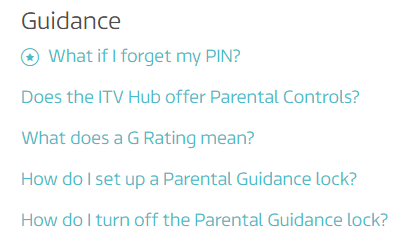 |
| ITV Player parental controls |
Ideally stick to related sub-genre texts (sci-fi/fantasy/horror would seem a good bet!) for detailed case studies BUT reference any teen TV drama for wider examples, regardless of (sub-)genre.
Be clear, teen drama DOES NOT EQUAL FAMILY DRAMA. Teen dramas will be much edgier than a family drama.
PARENTAL CONTROLS, STREAMING PLATFORMS
Streaming or timeshifted viewing doesn't neatly fit the watershed concept, but age restrictions will still apply. You need to research what iPlayer (BBC), ITV Player and C4's All 4 player, (etc) do for parental restrictions.
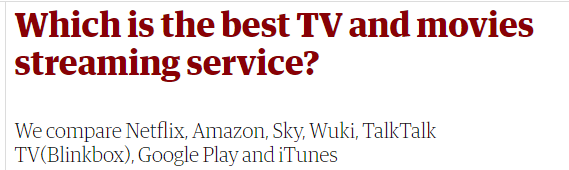
You need more boradly to research these and the American (but increasingly global) names like HBO (Wiki), Netflix, Amazon Prime, Hulu - and be aware of Disney's plans to have an exclusive online subscription for ALL their content soon (so not more Marvel films/TV on Netflix), and niche examples like WWE.com. Sky also has an add-on streaming servuce, SkyGo. Here's a Guardian overview of some major players.
How have they impacted traditional TV channels?
Friday, 27 April 2018
TV INDUSTRY resources
 |
| Barb infographic. |
2020
December
Rusbridger opinion piece on how Tory government and Murdoch are attacking the BBC. Guardian.
BBC Bitesize - useful terms, facts, graphs...
UKTV (a brand name) description of their TV channel brands.
Wiki: TV in the UK.
UK audience share of major TV corporations, including infographic.
Cost of placing ads on different UK TV channels.
Would people miss the BBC if it was scrapped?
Description of some major TV brands for advertisers.
10 most-watched UK TV channels.
This is taken from the BBC bitesize guide; no need to try and learn all these terms, but there could be ONE in there that might be used within your pitch:

Some more useful terms - ask if unsure of any:
analogue - the free-to-air channels that all TVs could show without subscription (just the legally required license fee for all TV owners, mainly funding the BBC) - BBC1, BBC2, ITV, C4 and from 1996 C5. The analogue TV signal has now been switched off in Britain, all channels are digital, cable or satellite (or web streamed), but BBC1 etc still have unique status
BBC - the state-owned broadcaster, it doesn't carry ads; the license fee pays for its content (and its international commercial arm, BBC Worldwide, which includes BBC America, which does carry ads)
BBFC - rates DVDs and even cut scenes in games, not just films
Co-production - not as universal as it is in the film industry, but with production budgets rising it is going that way. The BBC often co-produce with an American network to enable high budget productions. DVDs and Blu-Ray remain an important secondary market for TV production. Also see watershed.
Cross-media ownership - its common for conglomerates to own TV and other media companies, for example Sky is owned by Rupert Murdoch's (now split in 2) conglomerate, which in turn owns the S*n/Times newspapers (and many more worldwide), magazines, book publishers, 21st Century Fox, Fox TV network etc. This creates opportunities for horizontal integration: different subsidiaries from different media industries owned by one conglomerate combining to mutually promote and benefit each other (synergy), as in the case of Avatar's promotion (Sun stories galore, Sky One specials, launched Sky Movies 3D channel etc)
deregulation - rules on TV ownership and content have been simplified and reduced since the 1980s. Satellite/cable and later digital channels were given minimal restrictions compared to the existing analogue, PSB channels.
digital - all UK TV channels are now essentially digital, but the term 'digital channel' still denotes a non-terrestrial, typically smaller, channel. All of the terrestrial networks (BBC, ITV, C4, C5) have their own family of digital channels, mostly nice in contrast to their wide, mainstream audiences (eg BBC3 is 15-24/youth, BBC4 is upmarket, older high culture, 5USA focuses on US TV, E4 is C4's youth brand)
license fee - the BBC is paid for through a compulsory TV license (about £150 a year) for every household with a TV
monetising - ways of 'squeezing the brand'; making money other than direct programme sales (eg freemium apps, sponsorship)
niche - channels with minority, narrow, specialist interest/audience, eg Clubland TV (see list of UK TV channels)
OfCom - the organisation that regulates TV. TV channels are licensed by OfCom, who can issue warnings, fines and remove licenses (meaning they're legally banned from UK TV)
product placement - 'is when a company pays a TV channel or a programme-maker to include its products or brands in a programme.' [OfCom] Illegal in the UK until 2011 (part of deregulation)
PSB - public service broadcasting describes the requirements and output of the terrestrial channels BBC1, BBC2, ITV1, C4 and C5 (plus the BBC's other channels), legally required to carry a minimum of news at certain times for example, unlike digital channels.
ratings - (viewing figures) these determine the fees that can be charged to advertisers. See broadcastnow, and Barb (the organisation that gathers the figures)
scheduling - a real art, this is the decision-making around when to screen programmes, including decisions such as avoiding or going head-to-head with similar rival shows on other channels. See the BBC Bitesize terms list above for more
second screening - the common habit (especially of millennials!) of viewing TV while using a gadget to chat or post on what they're watching. Advertisers like to see evidence of such engagement, and programme makers/channels often encourage this with hashtags for example.
spectrum scarcity - right up to 1982 the UK had only 3 TV channels (BBC1, BBC2, ITV). Channel 4 was launched as new technology meant a 4th station could be squeezed into the analogue signal. 15 years later, with more improvements to compression technology, C5 was added.
sponsorship - distinct from ad-breaks, programme sponsors have their own trail as a show starts and at the end of each segment
terrestrial - the term for the original free-to-air channels (essentially the same as analogue) which were available through any TV set without a subscription
timeshifting - the increasingly common practice of viewing TV through streaming or catch-up, and so ignoring the original scheduling
watershed/post-watershed - adult content (swearing, violence, sexual content) is prohibited before 9pm, the time at which younger children are expected to be in bed (though its aimed at protecting under-16s). OfCom has fined channels for breaching this law. Many 15-rated (on DVD) shows would need to be cut for pre-watershed screening
BBC Bitesize - useful terms, facts, graphs...
UKTV (a brand name) description of their TV channel brands.
Wiki: TV in the UK.
UK audience share of major TV corporations, including infographic.
Cost of placing ads on different UK TV channels.
Would people miss the BBC if it was scrapped?
Description of some major TV brands for advertisers.
10 most-watched UK TV channels.
This is taken from the BBC bitesize guide; no need to try and learn all these terms, but there could be ONE in there that might be used within your pitch:

Some more useful terms - ask if unsure of any:
analogue - the free-to-air channels that all TVs could show without subscription (just the legally required license fee for all TV owners, mainly funding the BBC) - BBC1, BBC2, ITV, C4 and from 1996 C5. The analogue TV signal has now been switched off in Britain, all channels are digital, cable or satellite (or web streamed), but BBC1 etc still have unique status
BBC - the state-owned broadcaster, it doesn't carry ads; the license fee pays for its content (and its international commercial arm, BBC Worldwide, which includes BBC America, which does carry ads)
BBFC - rates DVDs and even cut scenes in games, not just films
Co-production - not as universal as it is in the film industry, but with production budgets rising it is going that way. The BBC often co-produce with an American network to enable high budget productions. DVDs and Blu-Ray remain an important secondary market for TV production. Also see watershed.
Cross-media ownership - its common for conglomerates to own TV and other media companies, for example Sky is owned by Rupert Murdoch's (now split in 2) conglomerate, which in turn owns the S*n/Times newspapers (and many more worldwide), magazines, book publishers, 21st Century Fox, Fox TV network etc. This creates opportunities for horizontal integration: different subsidiaries from different media industries owned by one conglomerate combining to mutually promote and benefit each other (synergy), as in the case of Avatar's promotion (Sun stories galore, Sky One specials, launched Sky Movies 3D channel etc)
deregulation - rules on TV ownership and content have been simplified and reduced since the 1980s. Satellite/cable and later digital channels were given minimal restrictions compared to the existing analogue, PSB channels.
digital - all UK TV channels are now essentially digital, but the term 'digital channel' still denotes a non-terrestrial, typically smaller, channel. All of the terrestrial networks (BBC, ITV, C4, C5) have their own family of digital channels, mostly nice in contrast to their wide, mainstream audiences (eg BBC3 is 15-24/youth, BBC4 is upmarket, older high culture, 5USA focuses on US TV, E4 is C4's youth brand)
license fee - the BBC is paid for through a compulsory TV license (about £150 a year) for every household with a TV
monetising - ways of 'squeezing the brand'; making money other than direct programme sales (eg freemium apps, sponsorship)
niche - channels with minority, narrow, specialist interest/audience, eg Clubland TV (see list of UK TV channels)
OfCom - the organisation that regulates TV. TV channels are licensed by OfCom, who can issue warnings, fines and remove licenses (meaning they're legally banned from UK TV)
product placement - 'is when a company pays a TV channel or a programme-maker to include its products or brands in a programme.' [OfCom] Illegal in the UK until 2011 (part of deregulation)
PSB - public service broadcasting describes the requirements and output of the terrestrial channels BBC1, BBC2, ITV1, C4 and C5 (plus the BBC's other channels), legally required to carry a minimum of news at certain times for example, unlike digital channels.
ratings - (viewing figures) these determine the fees that can be charged to advertisers. See broadcastnow, and Barb (the organisation that gathers the figures)
scheduling - a real art, this is the decision-making around when to screen programmes, including decisions such as avoiding or going head-to-head with similar rival shows on other channels. See the BBC Bitesize terms list above for more
second screening - the common habit (especially of millennials!) of viewing TV while using a gadget to chat or post on what they're watching. Advertisers like to see evidence of such engagement, and programme makers/channels often encourage this with hashtags for example.
spectrum scarcity - right up to 1982 the UK had only 3 TV channels (BBC1, BBC2, ITV). Channel 4 was launched as new technology meant a 4th station could be squeezed into the analogue signal. 15 years later, with more improvements to compression technology, C5 was added.
sponsorship - distinct from ad-breaks, programme sponsors have their own trail as a show starts and at the end of each segment
terrestrial - the term for the original free-to-air channels (essentially the same as analogue) which were available through any TV set without a subscription
timeshifting - the increasingly common practice of viewing TV through streaming or catch-up, and so ignoring the original scheduling
watershed/post-watershed - adult content (swearing, violence, sexual content) is prohibited before 9pm, the time at which younger children are expected to be in bed (though its aimed at protecting under-16s). OfCom has fined channels for breaching this law. Many 15-rated (on DVD) shows would need to be cut for pre-watershed screening
Wednesday, 11 April 2018
MUSIC INDUSTRY stats summary CDs behind streaming
UK record labels' revenue grows at fastest rate since 1995
https://www.theguardian.com/business/2018/apr/11/uk-record-labels-revenue-grows-at-fastest-rate-since-1995?CMP=Share_AndroidApp_Blogger
Tuesday, 10 April 2018
MAGAZINE REPRESENTATION Few BAME cover stars study reveals
Glossies so white: the data that reveals the problem with British magazine covers
https://www.theguardian.com/media/2018/apr/10/glossy-magazine-covers-too-white-models-black-ethnic-minority?CMP=Share_AndroidApp_Blogger
Sunday, 8 April 2018
TV DRAMA BUDGETS LotR 1st $1bn series
We've explored this recently...
TBC
https://www.independent.co.uk/arts-entertainment/tv/news/lord-of-the-rings-tv-show-amazon-peter-jackson-tolkien-most-expensive-a8292196.html
Friday, 30 March 2018
Monday, 5 March 2018
Sunday, 25 February 2018
TV DRAMA standalone bottle episodes
Why TV's brightest shows are turning episodes into standalone stories
https://www.theguardian.com/tv-and-radio/2018/feb/22/high-maintenance-atlanta-bottle-episodes-tv-success?CMP=Share_AndroidApp_Blogger
Tuesday, 20 February 2018
CSP M VID Arctic Monkeys - I Bet You Look Good on the Dancefloor
TBC
TOP 5 2ND HAND CDs OF 2020
The pre-owned market boomed online in the UK thanks to covid, and the AM had the 4th biggest selling CD of the year in this market, which saw Harry Potter books much in demand too! (Guardian) Of course, the band get zero revenue from the second hand market.
The official video:
Note the lack of audience - quicker + easier to shoot with continuity, and therefore cheaper; could be costly assembling an audience + keeping them there long enough for multi-shoots too. Verisimilitude is clearly important though: the guitar leads are plugged in, the sweat is flying, the performance is high energy, reinforced by selectively fast-paced editing (use of short takes).
Firth suggests there are 3 types of video: performance, narrative, concept; it is common to combine performance + 1 of the others, but, as noted above, this is performance only (again: cheaper); higher budgets would come with chart success.
Is this their most successful video? Not by a long shot as these screenshots from (the new YouTube-consolidated - used to be the VEVO artist channel*) their official channel: *read more here, look for UGC TAKES A HIT section


FOR COMPARISON/CONTEXT: When The Sun Goes Down
Another video, useful to reference - the social realist style links well to their determination to maintain a credible, 'authentic' image. John Moule commented on these videos (which he worked on) that the band, especially for a young, new, not established act, were exceptionally determined to control the creative process themselves. Its more common for an auteur director, or simply record company/management, to oversee the key creative decision-making for a video; pitches are often presented to a band (or their label/management) to okay, few bands come up with their own detailed proposals.
...
...
The official video:
Note the lack of audience - quicker + easier to shoot with continuity, and therefore cheaper; could be costly assembling an audience + keeping them there long enough for multi-shoots too. Verisimilitude is clearly important though: the guitar leads are plugged in, the sweat is flying, the performance is high energy, reinforced by selectively fast-paced editing (use of short takes).
 |
| The new consolidated YouTube channel. |
Is this their most successful video? Not by a long shot as these screenshots from (the new YouTube-consolidated - used to be the VEVO artist channel*) their official channel: *read more here, look for UGC TAKES A HIT section
FOR COMPARISON/CONTEXT: When The Sun Goes Down
Another video, useful to reference - the social realist style links well to their determination to maintain a credible, 'authentic' image. John Moule commented on these videos (which he worked on) that the band, especially for a young, new, not established act, were exceptionally determined to control the creative process themselves. Its more common for an auteur director, or simply record company/management, to oversee the key creative decision-making for a video; pitches are often presented to a band (or their label/management) to okay, few bands come up with their own detailed proposals.
...
...
Subscribe to:
Posts (Atom)