Tuesday, 30 October 2018

CLASS TV vertical integration and Netflix cancellations

Netflix is essentially clearing out its shows produced in partnership with conglomerates (Disney, Warner Bros) who are about to launch their own Netflix-rivalling streaming services.

In Britain there has been much discussion and debate over the need for a modern, global streaming service to prevent the slow death of domestic UK TV production.

The funding of the BBC is part of the reason it's pioneering iPlayer is a firewalled UK-only service. The BBC also buys in rights from American and occasionally European producers, and often co-produces with international partners - again, especially American networks.

Just as in the film industry an Indie (as the BBC essentially is) like Warp cannot commercially compete with conglomerate rivals like Working Title, so the BBC cannot compete with Sky (all the more so when Murdoch completes the sale!), currently it's main vertically integrated conglomerate and big six rival.

Would Class have survived if the BBC was focused on the international market as much as the domestic, UK market?

Basically ... yes.

Working Title succeeds on a commercial (box office) scale way beyond Warp Films because it's productions begin with a focus on the US market (10 times the size of the home market, following the Gant Rule!) and beyond, and the conglomerate funding and global distribution from parent company NBC-Universal make this possible.

Unless Auntie Beeb looks beyond the UK market then there will be more cancelled shows like Class, deemed too expensive for a niche portion of the home market. It does have a global commercial arm, BBC Worldwide, with channels like BBC America, but no globally accessible online distribution platform like Netflix or Amazon Prime.

It has also been found guilty by OfCom, which regulates commercial TV (ie, not funded by the license fee) and now also the BBC, of failing to adequately serve the youth audience, whose weekly time spent on BBC platforms (which includes dominant radio stations) is far below that of the 25+ age range.

All of the above analysis is an example of the WIDER CONTEXTS you need to consider for your exams.

https://tv.avclub.com/netflix-is-just-going-to-keep-killing-its-american-vand-1830037956

Sunday, 14 October 2018

CONVERGENCE MAG covers shot with phone camera

https://petapixel.com/2018/10/13/magazine-covers-shot-with-phones-aint-no-thang/

Thursday, 11 October 2018

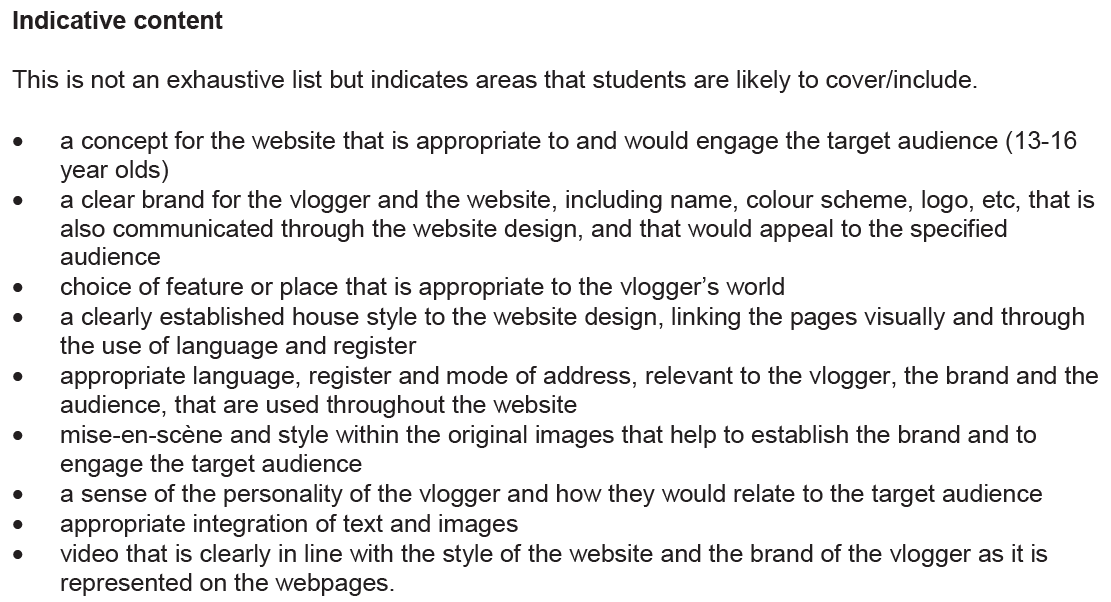
NEA 2019 vlogger brief

here's the brief:


And further guidance on what to be thinking about:


You will shortly be drafting a proposal form, pictured below.
The word limit for this is very short; you can use continuous prose or bullets, so long as your points are clear and you have built a convincing case on how your media language/representations choices will successfully target the stipulated 13-16 audience.


...


Friday, 28 September 2018

FILMING strategies for a successful shoot

Having watched the current Y10 manage 4 shots in 30 mins, here are a few pointers that will help you enjoy a more successful shoot. I did something similar for A-Level a while back (here's a student list). Don't expect to be brilliant right away - you haven't had the benefit of being taught anything yet!!!
[typed on a PC with IE only; can't format yet!]

IN THE BEGINNING...:
You're on a course to learn; your untrained instincts at the beginning are likely to be poor, featuring:
  • minimal planning
  • minimal referring to the minimal planning when shooting!
  • shooting each action point in a single take
  • not thinking through the best framing for each shot, nore therefore its symbolic (semiotic) purpose)
  • lack of direction (instructions) for cast
  • limited communication from the camera operator/s
  • filming with 1 camera
  • not using a tripod
  • minimal effort on costume, set dressing or props
PRACTICE MAKES...BETTER!
You'll learn and hone your instincts more the more you practice, just like anything else. If you wait for the few occasions we'll do filming exercises in Media lessons you'll find it hard to enjoy a good shoot.
As Master Yoda says to Luke Skywalker in The Last Jedi:
The chap on the left has some wise advice...
Failure a good teacher makes
Play around: make some terrible cinematic atrocities! If you look at A-Level students' blogs, with more filming exercises and drafting of coursework than at GCSE, you'll see some quite cringey things before they end up with the generally high-A-grade film openings (AS) and especially music videos (A2, with more experience!). If they attempted the same film openings/music videos without this practice they would still be pretty awful - but with it, they usually end up being rather impressive!

On the new GCSE you don't get your choice of briefs (tasks, and which media they involve) until June of Y10, but they will involve the media featured in the CSPs. Experiment and you'll get better over time.

MYSTERY, PLANNING, + USING YOUR PLANNING
Every idea should be explainable in ONE sentence (synopsis).
No clear idea = chaos.
Be clear on characters' look and mannerisms; think about body language.
Keep dialogue short unless you're working with pro actors
Imagine each scene in an actual TV show, movie etc - would you see ONE take for each action point?
Are there ways to use framing/shot types/angles to intentionally hide some details and create some mystery, at least for a little while? (narrative enigma) > HINT: shoot feet, OTS etc and don't immediately show a face
List shots in the order you'll shoot them. Its usually slower to shoot in the order they'll appear on screen.
Either rip up/burn your paper planning or use it as a guide when filming - score off shots as you film them
Do, however, think creatively when filming - can you now see any creative new/better/additional shots? Write them on your shot list if so - from a quick scan of these, are you achieving good shot variety

SHOOT BASICS
Someone needs to direct cast and crew: clear, precise instructions with reference to camera position and framing
To help camera framing, have a person, any person, in the character position
Unused cast/crew should stay behind the camera
If a tracking shot requires cast/crew to go further away this must be made clear
Be careful that a 2nd camera/tripod doesn't come into frame
Shoot more, not less: click record as soon as you start the 3-2-1... countdown (don't say the 'action/go'), don't stop recording too soon - trim your clips in editing
If you don't tell your cast you'll be resetting for more takes your shoot will take a very long time
Two cameras speed things up; you can be adjusting 1 tripod while filming a shot with the other
To achieve continuity pay close attention to hair, clothing and mise-en-scene - you can put small marks (eg with paper tape) on the ground to help with quicker resetting (if unseen within camera frame)

THE CUTAWAY SHOT
This is one that untrained filmmakers neglect
Grab some (usually CU) shots of props/parts of the mise-en-scene that are within the frames of (for example) sequences (multiple shots: shot reverse shot) of conversation which cut back and forth between 2 or more people. Cutaway shots can also be on a hand, foot etc.
These provide options in...

EDITING: WHERE SUCCESS OR FAILURE BECOMES CLEAR
Its only really when you come to edit that you'll realise if you've taken enough/too little
Think of shot A-B-A:
we took a MS (A) and a LS (B) of the same short action: start with A on screen, cut to B, and cut back to A.
Basically, cut away (not cutaway) from takes and return to them once or more to make a more interesting edit. YOU would be quickly bored by a series of single long takes.

FAILURE IS GOOD
Back to Master Yoda: you can always learn and do better on a reshoot. A failed shoot isn't the end of the world, so long as you learn and apply lessons from this. It takes time for ideas like the long list above to become instinct.

Thursday, 27 September 2018

DISRUPTION Apple News takes the biscuit

This is, as far as the publishing industry is concerned, the dark side of digitisation made plain. With Facebook and Google swallowing OVER 90% of new ad revenue online, and print circulation in freefall, publishers might hope that success through Facebook or Apple News views ('impressions') would balance out this dramatic loss of revenue.

Check out the article below for a stark statistic on how 54k views on an ezine, Slate, bring them more money than 54 MILLION views on Apple News, which is now a bigger platform for publishers material than Facebook.

That should ring some bells with the fierce debate raging over the music industry, especially Google-owned YouTube's controversially low payments.

So, here we see both disruption and convergence (Apple now becoming a key distribution channel for news and entertainment content, consumed on phones, tablets, phablets..., ripping up industry practices in the process).

https://www.macrumors.com/2018/09/26/apple-news-publishers-high-traffic-poor-revenue/

Monday, 24 September 2018

Teen Vloggers

Here's why vlogging is a compelling notion: 
Forbes: seven-year-old YouTuber makes £17.3m in one year

https://www.theguardian.com/technology/2018/dec/03/forbes-seven-year-old-youtuber-ryan-toys-review-made-17m-in-one-year?CMP=Share_AndroidApp_Copy_to_clipboard

A simple google or YouTube 'top teen vloggers' (worth trying with 2018 added) brings up useful results.

I used just 2 sources to quickly identify a range of relevant vloggers to help contextualise what Zoella does, and provide guidance on what you need to plan for your coursework vlog to match conventions:
MediaKix 2018 top 10 most popular on YouTube, and
list from MostAmazingTop10 channel.


Jaclyn And Casey 


All4tubekids


Cimorelli
singing sisters, now only 1 in teens, this vid is from 2015 though


JoJo Siwa
very energetic dance instruction vid, watch for editing, sound FX ... and refs ('other') to commercial links...

YouTube
Website -
Facebook - 475K page likes
Instagram - 7 million followers
Musical.ly - 16.7 million fans

Twitter - 383k followers, 6.1k tweets


Baby Ariel

Facebook -
YouTube - joined 22 June 2015, 278m total views
Website -
Halloween vid.


Annie LeBlanc

This is just a preview of a YouTube Red (paid-for) video from her own series.


Brooklyn and Bailey


YouTube - joined 14 Nov 2010, total 873m views

Friday, 21 September 2018

CROSSWORD GCSE Media Terms 1

A challenge to test your grasp of the terms we've learnt so far...

Click here for the crossword - when you type in an answer press return ... it goes green if you're right!

This is a great tool for individual or paired/group revision (for any subject) - its easy to create your own!

Monday, 4 June 2018

Vloggers

Some initial resources/links.

There have been articles on vloggers for a few years now, as mainstream media slowly catches on to what teens are doing (which often means not accessing mainstream media!). Look at both up to date and older articles to get a sense of how quickly or slowly such fame and popularity comes and goes ... do tween/teen vloggers keep their audience as they go beyond their t(w)eens?

I see Zoella's bro, Joe Sugg, is on a 2014 Huffington Post top 25.
Useful for the 2019 vlogger brief: Amber (YT).
...

2017/2018 lists
MTV's 2017 list features some younger examples.
A Mom's site may lean to the more conservative (but drops in some familiar names)
Top 19 YouTubers globally according to BusinessInsider data. MediaKix has a different list.
A list of UK vloggers.
Teen Vogue list.

Top vloggers tips.

Tuesday, 8 May 2018

STREAMING TV BBC NBC mega iPlayer?

BBC, ITV and Channel 4 in talks to create UK streaming service https://www.theguardian.com/film/2018/may/07/bbc-itv-and-channel-4-in-talks-to-create-uk-streaming-service-combat-netflix-amazon?CMP=Share_AndroidApp_Blogger

Monday, 7 May 2018

2018 TV Drama exam


I'll post more on here as we go.


On page 4 of a 'teen tv drama marketing' Google I found a link to a great 4-page guide produced for this specific exam (the moodle pdf link, right, if this hyperlink doesn't work).

I've tried to split the extensive resources below into key themes. Here's one so good you can start with it, as it exemplifies one of your key challenges. Further down the post, however, you'll find bar charts on which social media young people actually use, the decline of traditional TV watching, even with second screening, and the potentially A-grabbing point on using influencers to gain a wider teen audience for your marketing efforts. (The possible downsides of teen social media use could be a great narrative theme too!). There's an award for such efforts too! The overall role of second screening also needs to be addressed - below is a point on how this arguably validates some of the controversial modern teen shows like suicide-themed 13 Reasons Why - Netflix was widely condemned for releasing the new series in the exams window.
Guardian feature.
The Shorty Awards.
An interesting look at how teen TV has gotten much darker (more realistic?) over time


Some thoughts on the briefing paper - ie, issues for you to research:

THE BRIEF THEMES:

  • 'new original serial dramas' [aim to create a franchise but not from a franchise]
  • teen audience
  • any sub-genre
  • 'realistic + relevant representations of teens' ('The Serial Box is tired of the same old stereotypes of young people') [just like Class!!!]
  • for a streaming platform NOT a digital channel [not tied to advertisers = more creative freedom like HBO]
  • #serialtelevisiondrama
  • they are moving from content provider/distributor to content creation [great article on the TV drama boom]
  • why is serial TV drama so popular with audiences
  • extensive pre-launch digital marketing campaign [teasers, blogs, vlogs, across all social media...]
  • 'you should create characters, storylines + situations that a teen audience will engage in. ... creative, imaginative and, above all, entertaining' [so hybridise some comedy]


SCHOOL SETTING: GRANGE HILL: A long-running British teen drama (that also appealed to a wider children's audience, but was widely deemed unsuitable even for teens as it covered controversial issues like drug (heroin) addiction in a shocking way). The Wiki contents shows the type of things you're looking for: spin-offs, video game (and other 'old media' like books - pic above from here)

As Class, Buffy, The OC, Dawson's Creek, Grange Hill and endless other examples show, a school setting is a common, obvious one for teen drama, with exceptions necessitating either a context without schools (The 100) or older post-school teens (Misfits).

Once you focus on older (nearly 20) teens though, you move beyond what is intended for teen drama. Misfits would undoubtedly appeal to a teen audience, but 18-rated shows can't be marketed as teen drama.
A BBFC 15-rating is just about ok, but an 18 a definite no-no. However, you do need to show awareness of the growing 'edginess' of 'teen TV'; this article overviews many of the new shows reflecting this darkness of tone. This conservative, parental ratings, site can be useful too.

You could, though, like Dr Who, conceive of possible multiple linked series (just don't lose focus of the main one to pitch!!!) for multiple audiences linking younger, main teen, older teen + beyond:

  • The Sarah Jane Adventures for tweens
  • Dr Who main series - family audience from tween to adult
  • Class for 15-24s (though will clearly appeal to younger as well) [BBFC 12 or 15]
  • Torchwood for 15-34, with main characters all adults [BBFC 12 or 15]


RESEARCH THEMES
TEEN DRAMAS
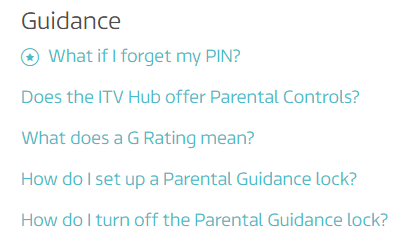
ITV Player parental controls
Good examples? Class! Buffy. The OC. Dawson's Creek. Skins. Grange Hill. The 100. ... Its not hard to find lists. Here's some UPCOMING examples, with a clear focus on edginess + identity politics/diversity. Aussie examples. I suggest you pick 3 case studies to research, with 1 a little older (released years ago) and 2 modern with maybe a difference in their BBFC ratings.

Ideally stick to related sub-genre texts (sci-fi/fantasy/horror would seem a good bet!) for detailed case studies BUT reference any teen TV drama for wider examples, regardless of (sub-)genre.

Be clear, teen drama DOES NOT EQUAL FAMILY DRAMA. Teen dramas will be much edgier than a family drama.


PARENTAL CONTROLS, STREAMING PLATFORMS
Streaming or timeshifted viewing doesn't neatly fit the watershed concept, but age restrictions will still apply. You need to research what iPlayer (BBC), ITV Player and C4's All 4 player, (etc) do for parental restrictions.
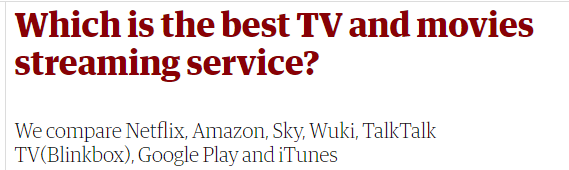
You need more boradly to research these and the American (but increasingly global) names like HBO (Wiki), Netflix, Amazon Prime, Hulu - and be aware of Disney's plans to have an exclusive online subscription for ALL their content soon (so not more Marvel films/TV on Netflix), and niche examples like WWE.com. Sky also has an add-on streaming servuce, SkyGo. Here's a Guardian overview of some major players.

How have they impacted traditional TV channels?

Friday, 27 April 2018

TV INDUSTRY resources

Barb infographic.
For now, some useful links.

2020
December
Rusbridger opinion piece on how Tory government and Murdoch are attacking the BBC. Guardian.


BBC Bitesize - useful terms, facts, graphs...

UKTV (a brand name) description of their TV channel brands.

Wiki: TV in the UK.

UK audience share of major TV corporations, including infographic.

Cost of placing ads on different UK TV channels.

Would people miss the BBC if it was scrapped?

Description of some major TV brands for advertisers.

10 most-watched UK TV channels.


This is taken from the BBC bitesize guide; no need to try and learn all these terms, but there could be ONE in there that might be used within your pitch:

Some more useful terms - ask if unsure of any:
analogue - the free-to-air channels that all TVs could show without subscription (just the legally required license fee for all TV owners, mainly funding the BBC) - BBC1, BBC2, ITV, C4 and from 1996 C5. The analogue TV signal has now been switched off in Britain, all channels are digital, cable or satellite (or web streamed), but BBC1 etc still have unique status

BBC - the state-owned broadcaster, it doesn't carry ads; the license fee pays for its content (and its international commercial arm, BBC Worldwide, which includes BBC America, which does carry ads)
BBFC - rates DVDs and even cut scenes in games, not just films
Co-production - not as universal as it is in the film industry, but with production budgets rising it is going that way. The BBC often co-produce with an American network to enable high budget productions. DVDs and Blu-Ray remain an important secondary market for TV production. Also see watershed.
Cross-media ownership - its common for conglomerates to own TV and other media companies, for example Sky is owned by Rupert Murdoch's (now split in 2) conglomerate, which in turn owns the S*n/Times newspapers (and many more worldwide), magazines, book publishers, 21st Century Fox, Fox TV network etc. This creates opportunities for horizontal integration: different subsidiaries from different media industries owned by one conglomerate combining to mutually promote and benefit each other (synergy), as in the case of Avatar's promotion (Sun stories galore, Sky One specials, launched Sky Movies 3D channel etc)
deregulation - rules on TV ownership and content have been simplified and reduced since the 1980s. Satellite/cable and later digital channels were given minimal restrictions compared to the existing analogue, PSB channels.
digital - all UK TV channels are now essentially digital, but the term 'digital channel' still denotes a non-terrestrial, typically smaller, channel. All of the terrestrial networks (BBC, ITV, C4, C5) have their own family of digital channels, mostly nice in contrast to their wide, mainstream audiences (eg BBC3 is 15-24/youth, BBC4 is upmarket, older high culture, 5USA focuses on US TV, E4 is C4's youth brand)
license fee - the BBC is paid for through a compulsory TV license (about £150 a year) for every household with a TV
monetising - ways of 'squeezing the brand'; making money other than direct programme sales (eg freemium apps, sponsorship)
niche - channels with minority, narrow, specialist interest/audience, eg Clubland TV (see list of UK TV channels)
OfCom - the organisation that regulates TV. TV channels are licensed by OfCom, who can issue warnings, fines and remove licenses (meaning they're legally banned from UK TV)
product placement - 'is when a company pays a TV channel or a programme-maker to include its products or brands in a programme.' [OfCom] Illegal in the UK until 2011 (part of deregulation)
PSB - public service broadcasting describes the requirements and output of the terrestrial channels BBC1, BBC2, ITV1, C4 and C5 (plus the BBC's other channels), legally required to carry a minimum of news at certain times for example, unlike digital channels.
ratings - (viewing figures) these determine the fees that can be charged to advertisers. See broadcastnow, and Barb (the organisation that gathers the figures)
scheduling - a real art, this is the decision-making around when to screen programmes, including decisions such as avoiding or going head-to-head with similar rival shows on other channels. See the BBC Bitesize terms list above for more
second screening - the common habit (especially of millennials!) of viewing TV while using a gadget to chat or post on what they're watching. Advertisers like to see evidence of such engagement, and programme makers/channels often encourage this with hashtags for example.
spectrum scarcity - right up to 1982 the UK had only 3 TV channels (BBC1, BBC2, ITV). Channel 4 was launched as new technology meant a 4th station could be squeezed into the analogue signal. 15 years later, with more improvements to compression technology, C5 was added.
sponsorship - distinct from ad-breaks, programme sponsors have their own trail as a show starts and at the end of each segment
terrestrial - the term for the original free-to-air channels (essentially the same as analogue) which were available through any TV set without a subscription
timeshifting - the increasingly common practice of viewing TV through streaming or catch-up, and so ignoring the original scheduling
watershed/post-watershed - adult content (swearing, violence, sexual content) is prohibited before 9pm, the time at which younger children are expected to be in bed (though its aimed at protecting under-16s). OfCom has fined channels for breaching this law. Many 15-rated (on DVD) shows would need to be cut for pre-watershed screening

Wednesday, 11 April 2018

MUSIC INDUSTRY stats summary CDs behind streaming

UK record labels' revenue grows at fastest rate since 1995 https://www.theguardian.com/business/2018/apr/11/uk-record-labels-revenue-grows-at-fastest-rate-since-1995?CMP=Share_AndroidApp_Blogger

Tuesday, 10 April 2018

MAGAZINE REPRESENTATION Few BAME cover stars study reveals

Glossies so white: the data that reveals the problem with British magazine covers https://www.theguardian.com/media/2018/apr/10/glossy-magazine-covers-too-white-models-black-ethnic-minority?CMP=Share_AndroidApp_Blogger

Sunday, 8 April 2018

TV DRAMA BUDGETS LotR 1st $1bn series

We've explored this recently...

TBC

https://www.independent.co.uk/arts-entertainment/tv/news/lord-of-the-rings-tv-show-amazon-peter-jackson-tolkien-most-expensive-a8292196.html

Sunday, 25 February 2018

TV DRAMA standalone bottle episodes

Why TV's brightest shows are turning episodes into standalone stories https://www.theguardian.com/tv-and-radio/2018/feb/22/high-maintenance-atlanta-bottle-episodes-tv-success?CMP=Share_AndroidApp_Blogger

Tuesday, 20 February 2018

CSP M VID Arctic Monkeys - I Bet You Look Good on the Dancefloor

TBC

TOP 5 2ND HAND CDs OF 2020
The pre-owned market boomed online in the UK thanks to covid, and the AM had the 4th biggest selling CD of the year in this market, which saw Harry Potter books much in demand too! (Guardian) Of course, the band get zero revenue from the second hand market. 

The official video:

Note the lack of audience - quicker + easier to shoot with continuity, and therefore cheaper; could be costly assembling an audience + keeping them there long enough for multi-shoots too. Verisimilitude is clearly important though: the guitar leads are plugged in, the sweat is flying, the performance is high energy, reinforced by selectively fast-paced editing (use of short takes).

The new consolidated YouTube channel.
Firth suggests there are 3 types of video: performance, narrative, concept; it is common to combine performance + 1 of the others, but, as noted above, this is performance only (again: cheaper); higher budgets would come with chart success.

Is this their most successful video? Not by a long shot as these screenshots from (the new YouTube-consolidated - used to be the VEVO artist channel*) their official channel:    *read more here, look for UGC TAKES A HIT section


FOR COMPARISON/CONTEXT: When The Sun Goes Down

Another video, useful to reference - the social realist style links well to their determination to maintain a credible, 'authentic' image. John Moule commented on these videos (which he worked on) that the band, especially for a young, new, not established act, were exceptionally determined to control the creative process themselves. Its more common for an auteur director, or simply record company/management, to oversee the key creative decision-making for a video; pitches are often presented to a band (or their label/management) to okay, few bands come up with their own detailed proposals.


...
...