You can type directly into this; click through to https://crosswordlabs.com/view/gcse-some-major-terms
If you're really stuck, I can give you a list of the words used for answers - though you'll still need to match them up to the right answer!
2017 Y11 crosswords are below the read more link...
Friday, 10 February 2017

Tuesday, 7 February 2017
FILM POSTER media language to audience analysis
...
 The high angle and shocked facial expression (of Pegg especially) connotes the vulnerability of the two humans in the picture. As well as a convincing alien figure achieving verisimilitude for this, the sci-fi genre is also signified through the purple/violet circle of light. More anchorage for the genre is given through the graphic design of the 'a' in Paul, featuring an alien figure.
The choice of a white bubble font signifies a less serious tone, and a target audience that includes teens, even though the uses and gratifications theory suggests teens might not so easily identify with the mature adult pair.
...

The choice of a white bubble font signifies a less serious tone, and a target audience that includes teens, even though the uses and gratifications theory suggests teens might not so easily identify with the mature adult pair.
...


Saturday, 28 January 2017
MAGAZINE audience research - get the advertiser profiles!
 |
| Just above this caption you'll see 'Media Pack' - this is for advertisers, detailing the readership of the magazine (Conde Nast Britain) |
Most magazines take in more revenue from advertising than from the cover price (from which, don't forget, distributors and retailers get their cut!).
In a very real sense, if you go out and buy a magazine, you're not buying anything ... you're being sold to advertisers!
 |
| Giant multinational conglomerate Time Inc. UK boast to advertisers of their music mag Uncut readership's spending habits |
At A-Level we look at theories such as Noam Chomsky's 'propaganda model' which argues advertisers play a highly ideological role in the media industry, acting as a 'filter' to keep out radical ideas that might threaten the rich and powerful.
 |
| Part of Dennis Publishing's blurb on 1 of their many titles |
For GCSE, just be aware that they play a key role in magazine branding: every title is seeking to attract an audience that will appeal to certain advertisers. This might be niche (narrow, specific, highly selective) or mainstream (broad, general) but the bottom line is that advertisers will not risk wasting valuable resources paying for space in a magazine that doesn't fit their customer profile. They MUST know who they'll be reaching with their ads - the age range, gender and income levels at a minimum.
 |
| Part of Haymarket Media's advertiser pitch for glossy footie mag FourFourTwo |
Therefore, magazine publishers are under pressure to provide detailed information, including demographic data (the % of readers within categories such as age, gender, income) to advertisers. This can often be found on the main websites of publishers, and accessing some examples should help you make your own audience analysis much more sophisticated.
 |
| Bauer, one of the leading UK publishers, provides advertisers with an interactive tool to match their needs to magazine brands! |
 |
| Just a few of the many magazine brands owned by Time Inc. UK |
To find these you need to know who the major magazine publishers are. In the UK, the focus for this blog, these change over time as there are mergers, closures and launches of new titles and categories too, but at the time of writing that includes (with examples of their publications):
Future (MacFormat, PC Gamer - here's a full list)
Bauer UK (Empire, Grazia, Kerrang! - audience finder; case studies)
Conde Nast Britain (Vogue, GQ - here's the GQ Media Pack)
DC Thomson (WWE Kids Magazine, Shout - Shout [girls mag] Media Pack - scroll to the bottom of main site for full list of titles)
Dennis Publishing (Cyclist, Cross Stitcher, PC Pro)
Haymarket Media Group (Autocar, FourFourTwo, Senior Living)
Hearst Magazines UK (Good Living, Hello, Cosmopolitan, Inside Soap - rate card for Elle)
Time Inc. UK (NME, Golf Monthly, Yachting World, Women's Weekly)
Find more magazines by using online shops such as this.
MAGAZINE the key steps to a good cover
You need to clearly evidence engagement with the KEY CONCEPTS of Media Language and Audience. That means knowing the technical terms, understanding design conventions, and how each media language decision can impact on the likely target audience. This is a task about branding, and the media language choices that enables an institution a specific target audience that can be sold to advertisers! In a declining market suffering from digital disruption, with plenty of titles closing or going web-only, the 'migration' of ad revenue to online (especially Google and Facebook) is a massive blow for the magazine industry.
STEP 1: IDENTIFY THE COMPONENTS OF A MAGAZINE COVER
There are many terms to learn, from straplines to masthead to hyperbole ... you need to be able to apply the correct, accurate industry label to each of these common elements of cover design.
STEP 2: BEGIN TO EXAMINE HOW EXISTING MAGAZINES VARY THESE COMPONENTS FOR DIFFERENT AUDIENCES
Throughout your Media Studies journey you'll be asked to research existing examples to learn industry conventions before constructing your own. You need to learn how media language choices are made to target different audiences.
STEP 3: RESEARCH A MAGAZINE SECTOR
Gather details of what magazines are available (we will focus on the UK market) in print of a magazine sector you think you would like to focus on for your own production. That might be music (if so, any specific genre?), fashion (men's, women's, girls?), technology (gaming - which console/platform?; futurism; general computing - or Windows, Mac, Linux...), consumer/lifestyle (homes, holidays, boats...), celebrity (usually considered women's magazines), film/TV (genre, time period...), sports/hobbies ... there are magazines covering most things you can think of.
See what ideas these examples give you - you might decide it does not seem such a good choice after all!
STEP 4: WRITE UP ANALYSES OF TWO MAGAZINE COVERS
You should by now have an idea of what type of magazine you will work on, so should pick two from your sector. You need to carefully and accurately apply a wide range of relevant terms. You also need to use the full range of audience terms, and engage with any theories that help to explain how audiences make their choices.


STEP 5: DEVELOP + PITCH YOUR MAGAZINE IDEA
STEP 1: IDENTIFY THE COMPONENTS OF A MAGAZINE COVER
There are many terms to learn, from straplines to masthead to hyperbole ... you need to be able to apply the correct, accurate industry label to each of these common elements of cover design.
STEP 2: BEGIN TO EXAMINE HOW EXISTING MAGAZINES VARY THESE COMPONENTS FOR DIFFERENT AUDIENCES
Throughout your Media Studies journey you'll be asked to research existing examples to learn industry conventions before constructing your own. You need to learn how media language choices are made to target different audiences.
STEP 3: RESEARCH A MAGAZINE SECTOR
Gather details of what magazines are available (we will focus on the UK market) in print of a magazine sector you think you would like to focus on for your own production. That might be music (if so, any specific genre?), fashion (men's, women's, girls?), technology (gaming - which console/platform?; futurism; general computing - or Windows, Mac, Linux...), consumer/lifestyle (homes, holidays, boats...), celebrity (usually considered women's magazines), film/TV (genre, time period...), sports/hobbies ... there are magazines covering most things you can think of.
See what ideas these examples give you - you might decide it does not seem such a good choice after all!
STEP 4: WRITE UP ANALYSES OF TWO MAGAZINE COVERS
You should by now have an idea of what type of magazine you will work on, so should pick two from your sector. You need to carefully and accurately apply a wide range of relevant terms. You also need to use the full range of audience terms, and engage with any theories that help to explain how audiences make their choices.


STEP 5: DEVELOP + PITCH YOUR MAGAZINE IDEA
MAGAZINES Institution - how digital disruption is transforming the print industry
 |
| You can find details of the many closures with a simple google. |
Every media industry has faced massive, often brutal, change as a result of digitisation. New forms of distribution are transforming ways of operating, with new names like Spotify and Netflix rising to threaten the old, established giants.
The term used to describe this phenomenon and process is disruption, or digital disruption - the smooth ways of doing business have been challenged, changed ... disrupted.
USEFUL TERMS: DIGITISATION; DISRUPTIONINDUSTRY AWARENESS: Because of the challenge of digitisation (young people preferring screens to print, and advertisers moving online, taking their money away from magazines), many titles have closed recently, unable to survive the double whammy of falling circulation (sales) and loss of advertising revenue*. If you really can't find current, ongoing titles, then you can use titles that were published during this current decade. *magazines generally rely more on advertiser fees than the cover price to make money!
The story seems simple: digitisation means that print magazines are doomed - but there is, possibly, one exception - luxury magazines ... [article link]

Friday, 27 January 2017
Tuesday, 13 December 2016
MUSIC VIDEO conventions research
To help evidence research into, and knowledge + understanding of, the media language of music videos, you need to analyse a wide range of examples.
From this, you should generate several well-illustrated pages with a summary (which you split into as many smaller topics, or put alongside aspects of your planning as you wish):

So - you're looking for screenshots that will help you illustrate conventions. Always name the artist, track and year for any video you reference. If you can also screenshot 1 or more YouTube playlists (of videos you've viewed/analysed for your research) from your own channel, this helps show the range and depth of your research.
From this, you should generate several well-illustrated pages with a summary (which you split into as many smaller topics, or put alongside aspects of your planning as you wish):
- the general media language (conventions; what makes it recognisable from other types of media text) of the format
- the media language specific to your genre/artist
You can see in this post on my blog dedicated to music video and the music industry (a very helpful resource for you to use), just a few of the elements you could pick out - here's a screenshot of some of those (from a much longer list):
So - you're looking for screenshots that will help you illustrate conventions. Always name the artist, track and year for any video you reference. If you can also screenshot 1 or more YouTube playlists (of videos you've viewed/analysed for your research) from your own channel, this helps show the range and depth of your research.
I will play you annotated clips from some videos I've blogged on, done an earlier vodcast on, and added to a playlist. We will pause after each clip so you can see if you can spot at least 1 more possible 'convention' demonstrated by this video. That might include any of Goodwin's points (he sums up six features that his research claims define the typical music video). You will find the necessary hyperlinks in this very useful post.
For The Pixies example, look again at this post...
We'll start with a discussion of the first 75 seconds of this...
...
We'll start with a discussion of the first 75 seconds of this...
...
Monday, 12 December 2016
MUSIC VIDEO research and planning evidence portfolio
An overview on how you might present research + planning evidence.
REPRESENTATION points to be added.
...
A SIMPLIFIED 12 PAGES LAYOUT
(Statement of goals)
1: INITIAL RESEARCH: GENERAL FORMAT CONVENTIONS
2: ARTIST/GENRE RESEARCH: NOTABLE CONVENTIONS
3: OUR/MY IDEA + INFLUENCES
4: AUDIENCE RESEARCH
GUIDANCE ON SECTIONS
I've included a suggested length for each section, within a range to give you flexibility. Include more of what you're strongest on.
KC Representation is also key, especially of age and gender (but you may wish to engage with social class, sexuality, location/place etc).
The A-grade 'Candidate B' got marked down for generalising - there was a lack of specific examples of media language from their research.
LENGTH? Between 3-5 pages, including relevant screenshots
Highlight a simple, clear statement of your primary and secondary target audiences (GAPS).
A list of key influences to help make really clear the impact of your research.
LENGTH: 1 (may go on to a 2nd page, but better on 1. Provide minimum 2 screenshots)
Primary research does not mean research into the primary target audience; it means unique, original data generated by your research efforts: eg opinion poll, survey, questionnaire, mood board. You have done this, but need to work on its presentation, including a clear summary of your findings for each of these sub-sections, then an overall one. (Research is also divided into quantitative, using numbers/data, and qualitative, based around interviews or panels for example)
Secondary research means from your reading of existing writing. An example would be points you get from articles like this [NB: contains some explicit language]. Make sure you credit the source, and make clear where you've quoted. Paraphrasing is usually better (putting into your own words, but still acknowledging the source).
Industry context is specifically using data (but also any user comments you think help) from YouTube, Spotify and other social media like Facebook, Twitter. You can contextualise by including general data/figures on these, such as the payment per 1000 streams. You've got this info, you just need to format and present it!
If you think your audience research points to some necessary change(s) to your initial idea and statement of target audience, BRIEFLY outline it. It is NOT a bad thing to do this.
LENGTH: 3-5 pages. Work to your strengths. If you've struggled with video analysis, do more on this - or vice versa.
Likewise, a pic of fanned/spread out permission forms and call sheets, but some clearly visible detail from at least one of these.
Storyboards and call sheets are useful, but also any behind-the-scenes evidence:
...
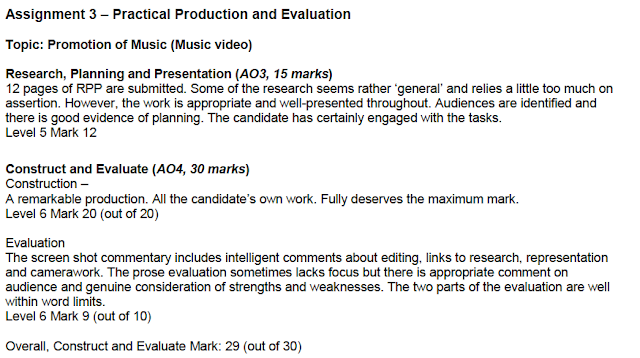
I can't embed the exam board doc here, but here's their marking of the example (2016 candidate B, assignment 3)
...
REFERENCING AND BIBLIOGRAPHY
Euan asks how he would go about a bibliography.
If thats a new term, it means a list of sources used within an essay, book, or evidence portfolio like yours.
You have used a source if you got information from it, whether you use direct quotes or not.
I'd suggest a 2-part approach to references:
1: LINKS WITHIN YOUR TEXT
State sources BRIEFLY as you go. Do this BRIEFLY by hyperlinking key words, DON'T show the full URL. Here's an example from a short blog post of mine:
The e-zine MetalSucks is one of many to feature the release of new Iron maiden figurines...
The examiner will only see a paper copy, but they can visually see you've acknowledged your source and made it clear where it comes from (an e-zine called MetalSucks). Notice that I use bold to make links stand out. Its quick + easy:
Here's another example from a MusiVidz blog post:
2: BIBLIOGRAPHY
This is quite useful to help evidence your 'engagement' with the task, one of the things examiners are looking for. You can list videos, sites, social media, e-zines, books, newspapers etc.
Here's an example of how you might do this (probably at the end of your 12 pages).
...
REPRESENTATION points to be added.
UPDATE, 2018: Scroll to bottom for a quick guide on referencing/bibliography (crediting. acknowledging your research sources)
Use the theory tag to find more posts outling terms and concepts you should seek to apply - and you should of course be using handouts from Year 10.
...
A SIMPLIFIED 12 PAGES LAYOUT
(Statement of goals)
1: INITIAL RESEARCH: GENERAL FORMAT CONVENTIONS
2: ARTIST/GENRE RESEARCH: NOTABLE CONVENTIONS
3: OUR/MY IDEA + INFLUENCES
4: AUDIENCE RESEARCH
- PRIMARY RESEARCH5: PLANNING
- SECONDARY RESEARCH
- INDUSTRY CONTEXT
- (if needed) IDEA UPDATE
- LOCATIONS, PROPS, SET DRESSING
- CAST + COSTUME/MAKE-UP
- STORYBOARDS/CALL SHEETS
- IMAGE USE PERMISSION FORMS
- PRODUCTION SCHEDULE (including cancelled but planned shoots)
GUIDANCE ON SECTIONS
I've included a suggested length for each section, within a range to give you flexibility. Include more of what you're strongest on.
1: INITIAL RESEARCH: GENERAL FORMAT CONVENTIONS
2: ARTIST/GENRE RESEARCH: NOTABLE CONVENTIONSKC M Lang is crucial here and on storyboards. Not just shot type/angles, but movement; edits/transitions (eg crosscutting, crossfade, layering) + pace (short/long takes). You should try to use semiotic terms wherever possible: anchors (makes clear the preferred reading); signifies/connotes instead of shows/symbolises; achieves verisimilitude (is convincing/realistic).
KC Representation is also key, especially of age and gender (but you may wish to engage with social class, sexuality, location/place etc).
The A-grade 'Candidate B' got marked down for generalising - there was a lack of specific examples of media language from their research.
LENGTH? Between 3-5 pages, including relevant screenshots
*********SUGGESTED FRAMEWORK - rather than tackle a series of individual videos in isolation, which you seem to find quite intimidating, use Goodwin's list of conventions as a series of sub-headings. Introduce the overall theory (see my Bagboy analysis for help) + briefly explain each of his suggested conventions. You can use multiple screenshots from a range of videos of each, using captions to make your analysis clear. HIGHLIGHT (bold+pink) any media terms you use, which should be quite a lot! Denotation of the shot type, angle, focus, edit/transition/SFX etc is important!!!*********
3: OUR/MY IDEA + INFLUENCESA clear, specific breakdown of the narrative + role of performance. (THEORY TIP: It was Firth who argued all music videos are categorisable as 1 or more of performance, narrative, concept. Both groups are combining perf/narr). This can be as bullet points.
Highlight a simple, clear statement of your primary and secondary target audiences (GAPS).
A list of key influences to help make really clear the impact of your research.
LENGTH: 1 (may go on to a 2nd page, but better on 1. Provide minimum 2 screenshots)
4: AUDIENCE RESEARCH
- PRIMARY RESEARCH
- SECONDARY RESEARCH
- INDUSTRY CONTEXT
- (if needed) IDEA UPDATEThis is where the 'Candidate B' most impressed.
Primary research does not mean research into the primary target audience; it means unique, original data generated by your research efforts: eg opinion poll, survey, questionnaire, mood board. You have done this, but need to work on its presentation, including a clear summary of your findings for each of these sub-sections, then an overall one. (Research is also divided into quantitative, using numbers/data, and qualitative, based around interviews or panels for example)
Secondary research means from your reading of existing writing. An example would be points you get from articles like this [NB: contains some explicit language]. Make sure you credit the source, and make clear where you've quoted. Paraphrasing is usually better (putting into your own words, but still acknowledging the source).
Industry context is specifically using data (but also any user comments you think help) from YouTube, Spotify and other social media like Facebook, Twitter. You can contextualise by including general data/figures on these, such as the payment per 1000 streams. You've got this info, you just need to format and present it!
If you think your audience research points to some necessary change(s) to your initial idea and statement of target audience, BRIEFLY outline it. It is NOT a bad thing to do this.
LENGTH: 3-5 pages. Work to your strengths. If you've struggled with video analysis, do more on this - or vice versa.
5: PLANNING
- LOCATIONS, PROPS, SET DRESSING
- CAST + COSTUME/MAKE-UP
- STORYBOARDS/CALL SHEETS
- IMAGE USE PERMISSION FORMS
- PRODUCTION SCHEDULE (including cancelled but planned shoots)This could be almost half of your 12 pages. Key assessment phrases:
plan independently + effectivelyThe key here is to think of this as a substantial snapshot of your planning. You can't really present a full, detailed storyboard - BUT you can show all of these as smaller images on a single page, and then pick out some frames or scenes to highlight in a more readable scale. What you should also do is use a different colour to individually highlight the influence of your research, plus how you're setting out to target the primary/secondary audience with the choices you are showing.
flair and creativity through pre-production work
... [which is] convincing, fit for purpose, and engaged
uses appropriate forms and conventions
material presented skilfully
clear understanding of how audiences are identified and how production is tailored to audience needs and expectations
Likewise, a pic of fanned/spread out permission forms and call sheets, but some clearly visible detail from at least one of these.
Storyboards and call sheets are useful, but also any behind-the-scenes evidence:
- before and after photos (or screenshots!) to show set-dressing, easy to annotate
- specifics of costume - try to get a shot of each cast member looking as different as possible to their appearance in your video to emphasise care over costume
- annotating can include reference to existing videos you've researched, or other intertextual links
- groups must include very clear detail which evidences individual roles; if you haven't detailed your share of work on production set-up, planning, camera, editing, directing then you cannot get credit for this
- groups should try to highlight different storyboard sections/scenes to help clearly individualise the 12pages, and link to evidence of individual contribution (I filmed/directed etc this scene)
- hardware used (you can briefly reflect on digitisation, convergence) + software you plan (this is written as done BEFORE filming/editing) to use
- try to indicate some planned use of SFX in storyboard samples
...
I can't embed the exam board doc here, but here's their marking of the example (2016 candidate B, assignment 3)

...
REFERENCING AND BIBLIOGRAPHY
Euan asks how he would go about a bibliography.
If thats a new term, it means a list of sources used within an essay, book, or evidence portfolio like yours.
You have used a source if you got information from it, whether you use direct quotes or not.
I'd suggest a 2-part approach to references:
1: LINKS WITHIN YOUR TEXT
State sources BRIEFLY as you go. Do this BRIEFLY by hyperlinking key words, DON'T show the full URL. Here's an example from a short blog post of mine:
The e-zine MetalSucks is one of many to feature the release of new Iron maiden figurines...
The examiner will only see a paper copy, but they can visually see you've acknowledged your source and made it clear where it comes from (an e-zine called MetalSucks). Notice that I use bold to make links stand out. Its quick + easy:
> Copy the link (CTRL+C or CMD+C [PC/Mac])
> Type your sentence
> Highlight a word/phrase
> make it bold (CTRL+B or CMD+B)
> Open the hyperlink window (CTRL+K or CMD+K)
> Paste the hyperlink in the box (CTRL+V or CMD+V)
> Hit ENTER or click OK
Here's another example from a MusiVidz blog post:
Its another reminder of the convergence between film and music video - bear in mind that the 1964 Beatles movie A Hard Day's Night [Wiki] is widely considered as having created the music video template (archetype) with its video-like scenesIn that case I just inserted a useful link in square brackets; I wasn't quoting from it.
2: BIBLIOGRAPHY
This is quite useful to help evidence your 'engagement' with the task, one of the things examiners are looking for. You can list videos, sites, social media, e-zines, books, newspapers etc.
Here's an example of how you might do this (probably at the end of your 12 pages).
BUT, you could also simplify this by doing a grid or collage of mastheads of books, sites, mags, papers etc you used for research, stressing this represents just SOME of your research. This approach would get you as much credit as the lengthier (longer?) list approach below.This list style should not be used in formal essays by the way.
BIBLIOGRAPHY
A selected list of some of the
sources used during my research.
Music videos viewed, analysed (YouTube links
unless stated):
Miley Cyrus: Wrecking
Ball; Pixies: Bagboy;
[and so on…]
YouTube Artist Channels I Explored/Analysed:
Artist/Genre/Fan sites I visited:
Other Streaming Services I researched, including
artist pages/channels:
Books, Newspapers, Magazines, E-zines used for
research (including use of Amazon’s Look
Inside and Google Books):
Simon Reynolds: Retromania;
Wikis I’ve researched:
...
Wednesday, 7 December 2016
MUSIC VIDEO 2016-17 Y11 rough to final cuts playlist
Playlisting is a great tool - a handy way for you to remember (and evidence, through screenshotting) which videos you've viewed for your research. You could (as I do) split this up into multiple themed playlists.
I'll gather your samples, rough cuts and eventually final cuts in the playlist below. It would be useful if you comment on each others. You can also view many past A2 music videos through my channel, and look at current A2 blogs to see more as they progress.
I'm happy to comment on a blog post if you prefer - just email me a link to the post where you've embedded your latest cut.
...
I'll gather your samples, rough cuts and eventually final cuts in the playlist below. It would be useful if you comment on each others. You can also view many past A2 music videos through my channel, and look at current A2 blogs to see more as they progress.
I'm happy to comment on a blog post if you prefer - just email me a link to the post where you've embedded your latest cut.
...
Tuesday, 6 December 2016
MUSIC VIDEO musividz blog
Just so that you can always easily find this ... I have been blogging for years now on music video and the music industry on my musividz blog. You can find LOTS of material and analysis on all 4 of your GCSE Media Key Concepts.
Remember too that this is hyperlinked on my main blog list (igsmediablogs) - scroll down and its under the A2 list:

You can have a look at post titles using the blog archive (click on any arrows to reveal posts for that month/year) - 1st screenshot below - or tag cloud (2nd screenshot below).
Remember too that this is hyperlinked on my main blog list (igsmediablogs) - scroll down and its under the A2 list:
You can have a look at post titles using the blog archive (click on any arrows to reveal posts for that month/year) - 1st screenshot below - or tag cloud (2nd screenshot below).
 |
| I clicked on the arrow to the left of the months to see the posts for that month. This text appears using the caption tool: add an image, click on it, and you'll see options including 'add caption'. |
 |
| This is just part of my tag cloud, reflecting the 500-odd posts I've done, most of which I eventually went back and retro-tagged to enable students to more easily find relevant material. |
MUSIC VIDEO some theory Goodwin Firth Hall
Some useful theory that helps you get into Media Language, but also Audience, Representation and, to an extent, Institution. Remember that I've blogged a huge amount on music video and industry at my musividz blog (primary target audience A2 or university students, but feel free to ask about anything you've read on there).
...
...
Tuesday, 29 November 2016
MAGAZINES specialist or hobby examples: martial arts
A quick look at the variety of examples available even within what may seem like a niche area: martial arts. A very simple google unearthed these resources within the first 5 hits - there is much more to be found.
1: USADOJO.COM listing of martial arts magazines (now updated here)

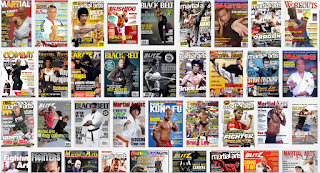
2: Google Images results - the variety is clear, though so are a number of stylistic/design themes, not least the cover shot...
3: Blitz mag - an Australasian martial arts title; note the emphasis on digital platforms...
1: USADOJO.COM listing of martial arts magazines (now updated here)

2: Google Images results - the variety is clear, though so are a number of stylistic/design themes, not least the cover shot...

3: Blitz mag - an Australasian martial arts title; note the emphasis on digital platforms...
Monday, 28 November 2016
Blogger - setting up a blog
Not a requirement for GCSE, but something you may find very useful for organising notes, and especially for archiving digital resources you've used, not least video.
See this post - and pop in and ask if you get stuck with blogging.
See this post - and pop in and ask if you get stuck with blogging.
Tuesday, 8 November 2016
MAGAZINE Teen mags and digital disruption
This article is a few years old; the trends (digital disruption; changing nature of teen life, especially for females) it noted have accelerated further since it was published. The general analysis certainly still holds true though...
...
...
Sunday, 30 October 2016
TV AD RATES Bake Off example
To give you an idea of just how expensive those 30 second ads can be, it is estimated that once The Great British Bake Off starts airing on C4 (an ad-funded broadcaster unlike the license fee funded BBC), its likely to charge at least £100k per ad (£200k+ for the final).
Then there's the sponsorship deal, which would rival the biggest, Talk Talk's £10m annual deal with ITV which gets it an ident at the start and end of each episode segment, and much more through online and print campaigns. £8m is what C4 are expected to get.
Bake Off's triumphant finale leaves Channel 4 with tricky task http://www.theguardian.com/media/2016/oct/27/great-british-bake-off-triumphant-finale-channel-4-tricky-task?CMP=Share_AndroidApp_Blogger
Monday, 24 October 2016
ASSGMT 3: Music video PITCHING
Pitching is a common practice across the business world, not just the media industries - you may have seen pitching in any episode of The Apprentice for example.
When pitching you are trying to persuade a select audience, generally potential funders or financiers (though it can also be the band/artist in the case of music video, with directors mostly taking the creative lead in videos, not artists), that your idea is realistic and thought through, and that it has a clear target audience in mind and can successfully appeal to them (plus a secondary audience you would address too).
Pitches should be well illustrated, which in itself helps to show how well prepared you are, and that you have thought through the challenges your idea represents.
Your pitch therefore should have a PowerPoint or other means of having relevant illustrations on screen as you speak - at A-Level a video will be expected (you can do this if you choose), but Ppt is fine for GCSE. That needs to be emailed to me (not a Googledocs edit invite, an attachment) before the lesson.
POINTS YOU MUST COVER:
When pitching you are trying to persuade a select audience, generally potential funders or financiers (though it can also be the band/artist in the case of music video, with directors mostly taking the creative lead in videos, not artists), that your idea is realistic and thought through, and that it has a clear target audience in mind and can successfully appeal to them (plus a secondary audience you would address too).
Pitches should be well illustrated, which in itself helps to show how well prepared you are, and that you have thought through the challenges your idea represents.
Your pitch therefore should have a PowerPoint or other means of having relevant illustrations on screen as you speak - at A-Level a video will be expected (you can do this if you choose), but Ppt is fine for GCSE. That needs to be emailed to me (not a Googledocs edit invite, an attachment) before the lesson.
POINTS YOU MUST COVER:
Wednesday, 19 October 2016
FONTS in fashion

InStyle UK magazine to shut print edition
http://www.theguardian.com/media/2016/oct/19/instyle-uk-magazine-digital-only-time-inc?CMP=Share_AndroidApp_Copy_to_clipboard
Subscribe to:
Posts (Atom)